5 Fun AI Experiments You Can Do With Your Kids This Weekend
Looking for engaging activities? Check out these 5 fun AI experiments to do with your kids this weekend and inspire their creativity and curiosity!
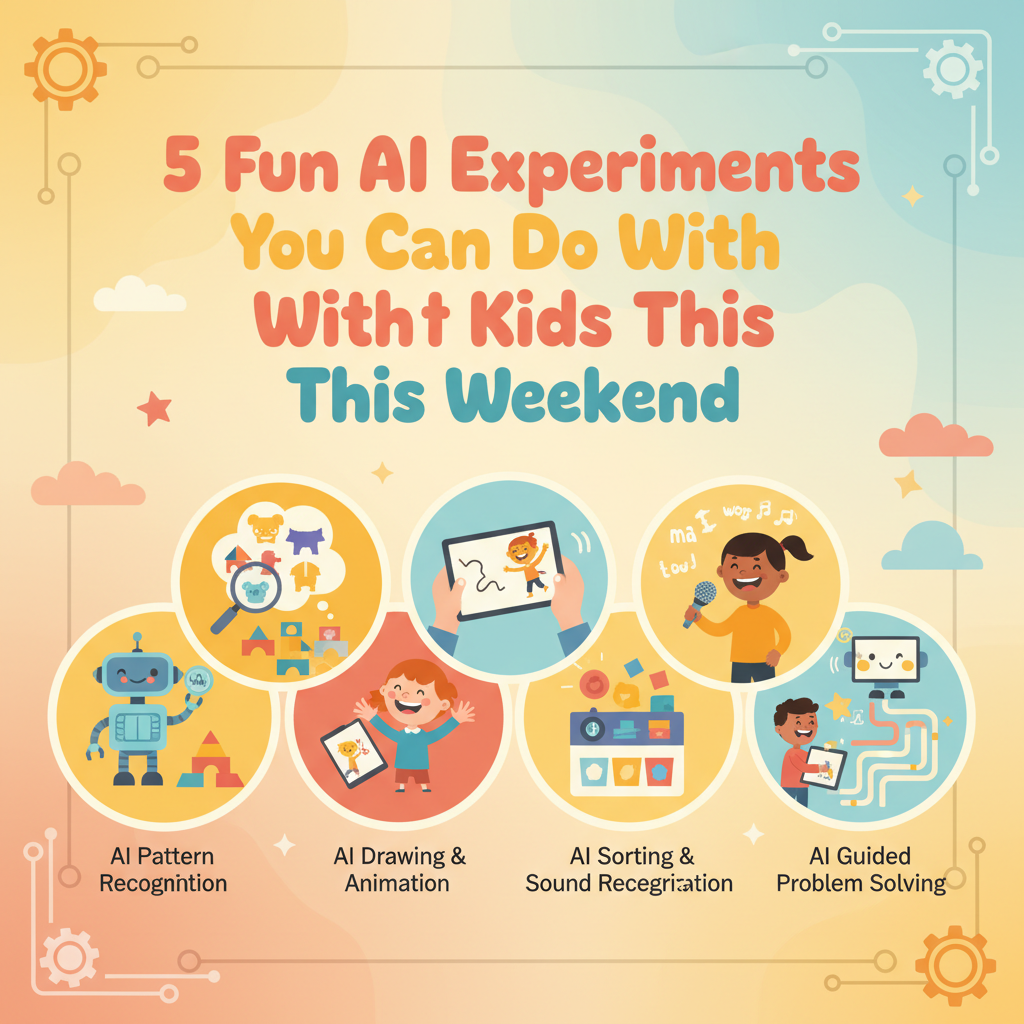
Why Hands-On AI Learning Matters for Kids
Artificial intelligence isn't just a buzzword anymore — it's quietly woven into the apps your children use, the music they stream, and even the way their school manages resources. Yet for most kids, AI remains an invisible mystery working behind the scenes.
The good news? You don't need a computer science degree or a lab full of expensive equipment to start exploring AI with your children. A kitchen table, a curious mind, and a free afternoon are genuinely enough to get started. These five experiments are designed to spark real conversations, encourage critical thinking, and — most importantly — make learning feel like play.
Experiment 1: Teach a Machine to Recognise Your Drawings
What you'll need: A device with internet access, Google's free Teachable Machine or Quick, Draw!
Quick, Draw! is one of the most delightful introductions to AI you can offer a child of any age. Your child draws a simple object — a cat, a bicycle, a sandwich — and a neural network tries to guess what it is in real time. The magic moment happens when the AI gets it right and when it gets it hilariously wrong.
What Kids Learn
After a few rounds, pause and ask: "How do you think the computer learned to recognise a cat?" This opens up a natural conversation about training data — the idea that AI systems learn from millions of examples, just like children learn from experience. Older kids (10+) can take this further with Teachable Machine, where they actually build their own image classifier using their webcam.
Tip for parents: Don't rush past the mistakes. When the AI misidentifies a drawing, that's the most valuable teaching moment. It shows children that AI is a tool made by humans — clever, but imperfect.
Experiment 2: Have a Conversation With a Chatbot — Then Interrogate It
What you'll need: Access to a family-friendly AI chatbot (ChatGPT, Microsoft Copilot, or the guided AI tools available through GenAI Kids)
This experiment works brilliantly for children aged 8 and up, and it's more structured than it sounds. Start by asking the chatbot some straightforward questions together — favourite colours, what happened in history, how to make pancakes. Then get playful and start testing its limits.
The "Stump the AI" Game
Challenge your child to ask questions the AI struggles with:
- "What did I have for breakfast?"
- "Is my teacher nice?"
- "What's happening outside right now?"
When the AI admits it doesn't know — or worse, confidently makes something up — you've struck gold. This introduces children to the concept of AI hallucinations and the critical importance of fact-checking. It's a lesson in digital literacy that will serve them throughout their entire education.
Follow-Up Discussion Prompts
- "Why do you think it got that wrong?"
- "Would you trust this answer for your homework? Why or why not?"
- "Who do you think wrote all the information this AI learned from?"
Experiment 3: Build a Simple Decision Tree on Paper
What you'll need: Paper, coloured pens, and 20–30 minutes
This one might be the most underrated activity on the list — and it requires zero technology. A decision tree is one of the foundational concepts in machine learning, and children as young as six can grasp it intuitively.
How to Do It
Ask your child to help you teach an imaginary robot how to decide what to wear in the morning. Start with a simple question at the top: "Is it raining?" Branch into yes/no answers, then keep branching — "Is it cold?", "Are you going to school or staying home?" — until you've mapped out a complete decision pathway.
Once the tree is built, take turns being the "robot" and following only the branches, no common sense allowed. Children find this hilarious and illuminating. It demystifies how AI systems can appear to make smart decisions by simply following very well-designed rules.
Why it works: This activity builds computational thinking skills that underpin coding, logic, and problem-solving — all without touching a screen.
Experiment 4: Sort It Like an Algorithm
What you'll need: A mixed bag of household objects (coins, buttons, pasta shapes, LEGO bricks)
Dump the objects onto a table and give your child a challenge: "Sort these as fast as you can — explain your rules as you go." Then change the sorting criteria (by colour, then by size, then by material) and observe how they adapt.
Connecting It to AI
Explain that sorting and classifying information is one of the most important things AI systems do — from identifying spam emails to diagnosing medical images. The rules your child used? Those are essentially algorithms.
For older children, introduce the idea that an AI doesn't get to see all the objects first — it has to make decisions one item at a time, based only on what it's learned before. This mirrors how machine learning models process new data in the real world.
Practical Tips for Making These Experiments Count
Getting the activity right is only half the job. Here's how to make the learning stick:
- Ask open questions, not closed ones. "What do you notice?" gets richer responses than "Did you like that?"
- Let your child be the expert. Encourage them to explain what they observed back to you — teaching is the deepest form of learning.
- Keep sessions short and sweet. Thirty focused minutes beats two hours of wandering attention.
- Follow up during the week. Point out AI in daily life — autocomplete on your phone, a Netflix recommendation, a voice assistant — and reference what you discovered together.
- Use structured resources to go deeper. Platforms like GenAI Kids offer age-appropriate lessons, videos, and guided activities designed specifically to build on curious moments like these.
Key Takeaways
- You don't need special equipment or expertise to explore AI with your children at home.
- Hands-on experiments make abstract AI concepts concrete and memorable.
- The "mistakes" AI makes are just as valuable as the things it gets right — use them as teaching moments.
- Activities like decision trees and sorting games build computational thinking without any screen time.
- Consistent, curious conversations about AI in everyday life reinforce formal learning powerfully.
- Structured platforms like GenAI Kids can help you build on weekend experiments with a clear, age-appropriate curriculum.
Start This Weekend — Not Someday
The children growing up today will live and work in a world where understanding AI isn't optional — it's essential. But more than preparing them for a job market, these experiments cultivate something timeless: the habit of asking how does this work? and who decided that?
You don't need to have all the answers. In fact, discovering things together is precisely the point. Pick one experiment from this list, clear the kitchen table, and see where curiosity takes you.
Ready to keep the momentum going? Explore the free resources at GenAI Kids and find structured learning pathways that turn weekend curiosity into lasting confidence.
Ready to Start Learning AI?
Join thousands of kids on GenAI Kids — free beginner lessons, no card needed.


