5 Fun AI Experiments You Can Do With Your Kids This Weekend: A Teacher and Parent Checklist
Looking for a fun way to explore technology with your children? Try these 5 simple AI experiments that make learning about artificial intelligence an exciting weekend adventure.
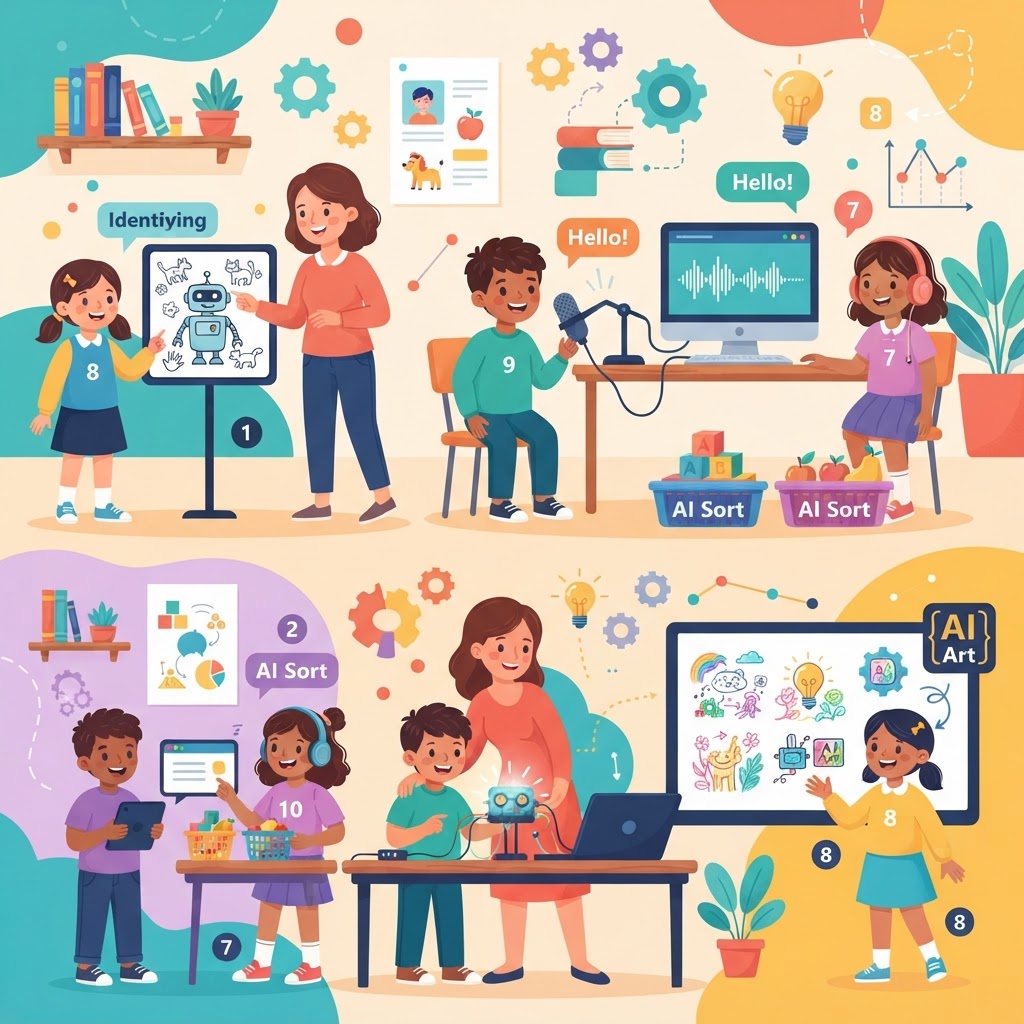
Why This Weekend Is the Perfect Time to Explore AI With Your Kids
Artificial intelligence isn't a distant, abstract concept reserved for university lecture halls and Silicon Valley boardrooms. It's already woven into the fabric of everyday family life — from the playlist Spotify curates for your morning school run to the way Netflix seems to just know what your kids want to watch next.
The question isn't whether your children will encounter AI. They already have. The real question is whether they'll understand it, or simply be swept along by it.
This weekend, you don't need a lab, a coding degree, or expensive equipment. You just need curiosity, an internet connection, and a willingness to learn alongside your child. The five experiments below are designed for families and classrooms alike — practical, engaging, and genuinely illuminating for kids aged 6 to 16.
Experiment 1: Have a Conversation With a Chatbot — Then Interrogate It
What you'll need: A device with internet access, a free chatbot (ChatGPT, Google Gemini, or similar)
Best for: Ages 8–16
This is the most accessible starting point for most families. Open up a chatbot and let your child ask it anything — their favourite football team's history, how volcanoes work, or even a made-up riddle they invented on the spot.
Then comes the real experiment. Ask your child to try to catch the AI making a mistake. Encourage them to:
- Ask the chatbot something only they would know (a family nickname, a personal memory)
- Ask it a question with a deliberately wrong premise: "Why is the moon made of cheese?"
- Request a poem about their pet, then judge the results together
The goal isn't just entertainment — it's critical thinking. Discuss: How do you think it knew that? Why did it get this wrong? Is this information trustworthy? These conversations are the foundation of AI literacy.
Experiment 2: Train Your Own Simple AI Using a Drawing Game
What you'll need: Quick, Draw! by Google (free, browser-based)
Best for: Ages 6–12
Google's Quick, Draw! is secretly one of the most effective AI education tools for younger children — and it feels like pure play.
Your child draws a simple object (a cat, a shoe, a rainbow) while an AI tries to guess what it is in real time. What makes this brilliant is the transparency: the tool shows your child what other drawings it has learned from, helping them understand the concept of training data in a completely intuitive way.
What to discuss afterwards:
- "Why did the AI guess 'cat' before you finished drawing?" (It's seen millions of cat drawings before)
- "What happens if you draw your cat differently from how most people draw cats?"
- "Who taught the AI — and how?"
This single conversation can introduce concepts like machine learning, pattern recognition, and data bias — without a single textbook in sight.
Experiment 3: Spot the AI — A Media Detective Challenge
What you'll need: A selection of images, text, or audio (easily found online)
Best for: Ages 10–16
Print out or display a mix of AI-generated images alongside real photographs. Include an AI-written paragraph next to a human-written one. Play a short clip of AI-generated music next to a track by a human artist.
Challenge your child to be a detective: Which is made by a human, and which was made by AI?
This experiment builds media literacy — one of the most critical skills children will need in the coming decade. As AI-generated content becomes increasingly sophisticated, the ability to question the origin and authenticity of information is invaluable.
Afterwards, sign up for a structured lesson on GenAI Kids, where this concept is explored in age-appropriate depth, helping children develop a reliable framework for evaluating the media they consume every day.
Experiment 4: Build a Sorting Machine — Without a Computer
What you'll need: A collection of household objects (buttons, fruit, toys), paper, pens
Best for: Ages 6–10
This offline experiment is a favourite among primary school teachers because it makes the logic of AI tangible before children encounter the technology itself.
Ask your child to sort a pile of mixed objects into groups. Then ask them to write down the rules they used. Round two: swap the rules with a sibling or parent. Can someone else follow the rules and sort correctly?
This is, in essence, how a machine learning algorithm works: a set of rules, refined over time, that allows a system to categorise new information. When children experience the frustration of writing rules that don't quite cover every case, they genuinely understand why training an AI is so complex.
Practical Tips for Parents and Educators
Getting the most from these experiments doesn't require perfection — it requires presence. A few principles to keep in mind:
- Follow your child's curiosity. If they want to spend an hour interrogating the chatbot about dinosaurs, let them. The tangent is often where the real learning lives.
- Ask more than you explain. "What do you think?" is more powerful than a lecture about neural networks.
- Normalise not knowing. AI is genuinely complex. Saying "I don't know — let's find out together" models exactly the kind of intellectual humility we want children to carry into adulthood.
- Use structured resources to go deeper. Platforms like GenAI Kids provide curriculum-aligned, age-appropriate lessons that extend weekend curiosity into lasting understanding — ideal for both home learners and classroom teachers looking for supplementary material.
Key Takeaways
- AI education doesn't require expensive tools or technical expertise — curiosity is the most important ingredient
- Hands-on experiments (chatbots, drawing games, sorting activities) make abstract concepts genuinely accessible for children aged 6–16
- Critical thinking and media literacy are just as important as technical knowledge — perhaps more so
- Asking questions together is more valuable than having all the answers
- Structured platforms like GenAI Kids can bridge the gap between playful experimentation and meaningful, progressive learning
Start the Conversation This Weekend
The best time to introduce your child to AI was yesterday. The second best time is Saturday morning, with a bowl of cereal, a shared screen, and a spirit of genuine curiosity.
You don't need to be an expert. You just need to be interested — and willing to be surprised by how much your child already intuitively understands about the world they're growing up in.
Pick one experiment from this list. Just one. See where it takes you. The conversation that follows might be the most important one you have all week.
Ready to Start Learning AI?
Join thousands of kids on GenAI Kids — free beginner lessons, no card needed.


