5 Fun AI Experiments You Can Do With Your Kids This Weekend: August 2026 Guide
Turn screen time into learning time! Explore these 5 creative AI experiments designed to engage your kids and spark their curiosity this weekend.
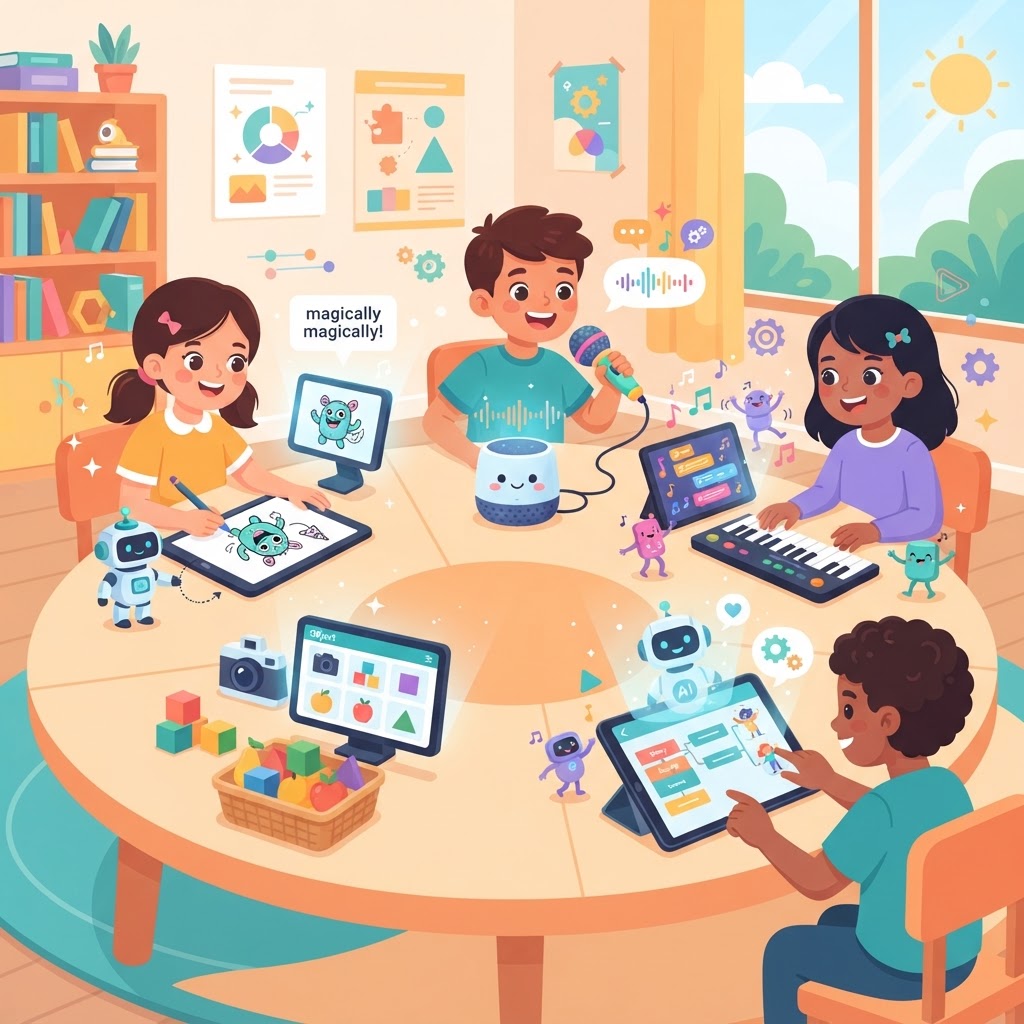
Why This Weekend Is the Perfect Time to Explore AI Together
Artificial intelligence isn't just something happening in labs or boardrooms anymore — it's in your child's favourite apps, the music recommendations that pop up on streaming services, and even the filters they use on photos. And here's the exciting truth: you don't need to be a tech expert to explore it together as a family.
August 2026 is a genuinely brilliant moment to dive in. AI tools have become more accessible, more visual, and more child-friendly than ever before. Whether your child is six and just discovering how computers "think," or sixteen and already curious about coding careers, there are hands-on experiments that will spark real conversations and genuine wonder.
So clear the kitchen table, grab some snacks, and let's get started.
Experiment 1: Talk to an AI and Try to Confuse It
Best for ages: 7–14
This one sounds simple, but it leads to surprisingly deep thinking. Open any family-safe AI chatbot — there are several designed specifically for younger users — and challenge your child to ask it questions it can't answer well.
Try things like:
- "What's happening outside my window right now?"
- "How do I feel today?"
- "What did I eat for breakfast?"
When the AI gets stumped or gives a funny non-answer, use it as a springboard for discussion. Why can't it answer these questions? This naturally introduces concepts like data, context, and the fact that AI only knows what it has been taught.
Parent tip: Ask your child to keep a little notebook of their "wins" against the AI. It builds critical thinking and reminds them that humans still have knowledge and experiences machines simply don't have access to.
Experiment 2: Train Your Own Mini Image Classifier
Best for ages: 9–16
This is one of the most satisfying experiments you can do together, and it requires zero coding knowledge. Tools like Google's Teachable Machine (free and browser-based) let you train a simple AI model using your webcam in about fifteen minutes.
Here's what to do:
- Go to teachablemachine.withgoogle.com
- Choose "Image Project"
- Create two or three categories — for example, "thumbs up," "thumbs down," and "open hand"
- Show the camera examples of each gesture (the more examples, the better!)
- Click "Train Model" and watch the AI learn in real time
- Test it and see how well it recognises your gestures
The moment children see the AI correctly identifying their hand in real time — based on training they provided — something clicks. They're not just using technology; they've built something. That shift in perspective is enormously valuable.
Parent tip: After the experiment, ask: "What would happen if we only showed it one example of each gesture?" This explores the idea of training data quality, a genuinely important concept in real-world AI.
Experiment 3: Write a Story Together — With AI as a Co-Author
Best for ages: 6–13
This experiment blends creativity and technology in a way that feels like play. Use a family-safe AI writing assistant and take turns with your child contributing to a story.
The rules:
- Your child writes the opening sentence
- The AI writes the next paragraph
- Your child reads it, changes anything they don't like, and adds the next sentence
- Repeat!
You'll likely end up with something wonderfully strange and funny. More importantly, your child will start to notice patterns in how the AI writes — the words it chooses, the story structures it falls back on, the moments it gets repetitive or surprising.
This is a great way to build both literacy skills and AI literacy simultaneously. Resources like GenAI Kids offer guided storytelling activities specifically designed for different age groups, which can give this experiment more structure if you need it.
Parent tip: Print out the final story and put it on the fridge. Give both your child and the AI co-author credit. It's a lovely keepsake and a great conversation starter when visitors ask about it.
Experiment 4: Spot the AI — A Family Media Challenge
Best for ages: 8–16
This experiment takes no tools at all — just your existing screens and some healthy scepticism.
Spend 20–30 minutes as a family scrolling through content you'd normally consume: YouTube recommendations, music playlists, social media feeds (where appropriate), or even the order that search results appear. Each time you notice something, ask:
- "Why did this appear here?"
- "Do you think a human chose this, or an algorithm?"
- "Is this showing us what we want to see, or what someone else wants us to see?"
This builds AI awareness — one of the most important skills for digital citizenship in 2026. Children who understand that AI is shaping what they see are far better equipped to think critically about the media they consume.
You can extend this into a fun game: give points for correctly identifying AI-curated content versus human-curated content, then check together to see if you were right.
Experiment 5: Ask AI to Teach You Something — Then Fact-Check It
Best for ages: 10–16
Pick a topic your child is learning in school — the water cycle, the French Revolution, how volcanoes work — and ask an AI to explain it. Then, together, verify what it says using books, encyclopaedias, or trusted educational websites.
This experiment does double duty: it reinforces school content while teaching children the critical habit of not accepting AI outputs at face value. The GenAI Kids platform has excellent resources on responsible AI use that complement this experiment perfectly.
Practical Tips for a Smooth Weekend Session
- Keep sessions short. 20–30 minutes per experiment is plenty. Curiosity shouldn't tip into screen fatigue.
- Follow their lead. If your child gets excited about one experiment and wants to go deeper, let the agenda shift.
- Ask more than you tell. The best learning happens when children arrive at insights themselves.
- It's okay not to know. Saying "I'm not sure — let's find out together" is one of the most powerful things a parent can model.
Key Takeaways
- AI experiments at home don't require coding skills or expensive equipment
- Hands-on activities like image classifiers and co-written stories make abstract concepts tangible
- Critical thinking — questioning, fact-checking, and spotting AI influence — is just as important as technical understanding
- Children of all ages (6–16) can engage meaningfully with AI, with the right activity
- Weekend experiments plant seeds for long-term curiosity, confidence, and digital literacy
Ready to Go Deeper?
One weekend of experiments is a brilliant start — but the most confident, curious kids are the ones who keep exploring consistently. GenAI Kids offers structured, age-appropriate learning paths that build on exactly the kind of wonder these experiments spark.
Bookmark the platform, share this article with another parent or teacher who'd love some weekend inspiration, and most importantly: enjoy the conversations. The questions your child asks this weekend might just shape how they see the world for years to come.
Ready to Start Learning AI?
Join thousands of kids on GenAI Kids — free beginner lessons, no card needed.


