AI Ethics for Kids: Teaching Right from Wrong in the Age of AI
Discover how to teach your kids about AI ethics, helping them understand right from wrong in an increasingly digital age.
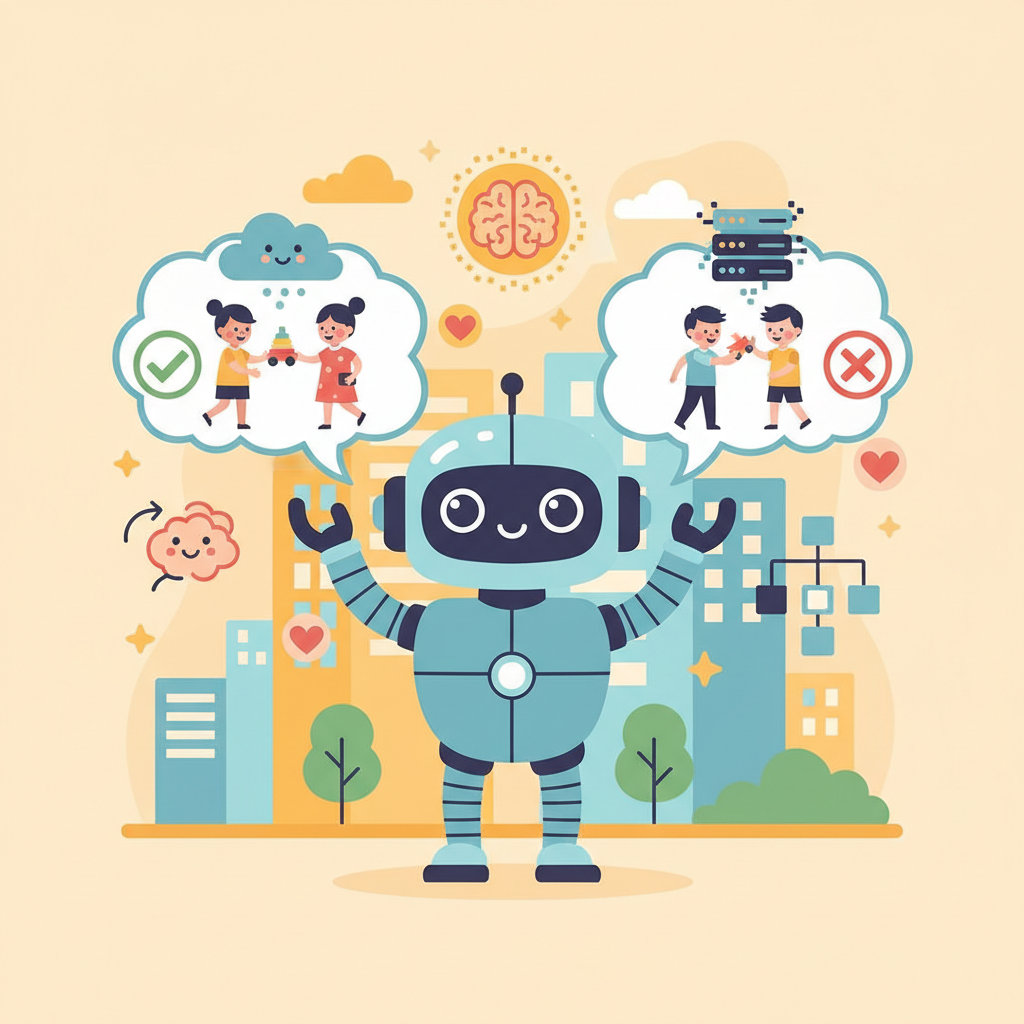
Why AI Ethics Matters for the Next Generation
Artificial intelligence is no longer a distant, science-fiction concept. It's in the apps our children use daily, the recommendations that pop up on their screens, and the homework helpers they're increasingly turning to. With this rapid integration comes a pressing responsibility: teaching kids not just how to use AI, but how to use it well.
Ethics — understanding right from wrong — has always been a cornerstone of raising thoughtful, responsible human beings. But in the age of AI, that conversation needs to expand. Children today are growing up as the first generation to interact with intelligent machines as a natural part of life. If we don't guide them through the moral landscape of that experience, we leave them to navigate it alone.
The good news? Kids are remarkably capable of understanding ethical concepts when they're explained in age-appropriate, engaging ways. And starting early makes all the difference.
What Does "AI Ethics" Actually Mean for Kids?
Before we can teach AI ethics, it helps to break down what we actually mean by the term — especially in the context of childhood and adolescence.
At its core, AI ethics for kids covers three big ideas:
Fairness and Bias
AI systems learn from data created by humans — and humans are imperfect. This means AI can sometimes make unfair decisions or reflect biases that disadvantage certain groups of people. Teaching children to ask "Is this fair to everyone?" when they see AI in action plants the seeds of critical thinking that will serve them for life.
Privacy and Safety
Many AI tools collect data about their users. Children need to understand that what they share online — with AI chatbots, apps, or platforms — can be stored, analysed, and sometimes misused. Teaching digital boundaries isn't just good sense; it's a safety essential.
Honesty and Responsibility
When a child uses an AI tool to help write an essay, is that cheating? When an AI-generated image looks completely real, how do we know what's true? These questions touch on honesty, intellectual integrity, and the responsibility we all share for the content we create and share — even when a machine helps us do it.
Age-Appropriate Ways to Introduce AI Ethics
One of the most common mistakes parents and educators make is assuming ethical conversations need to be formal or heavy. They don't. In fact, the best ones happen naturally, woven into everyday moments.
For Younger Children (Ages 6–9)
Start with the concept of fairness. Ask simple questions: "Do you think it's fair if a computer decides who gets into a school?" or "What if a robot made a mistake — whose fault would that be?" These conversations don't need a definitive answer; they need curious, open minds.
Story-based learning works brilliantly at this age. Look for books and interactive tools that frame AI in relatable scenarios. Platforms like GenAI Kids offer age-calibrated activities that introduce these concepts through play and storytelling, making abstract ideas concrete and fun.
For Older Children and Teens (Ages 10–16)
Teenagers are ready for deeper discussions around accountability, misinformation, and the societal impact of AI. Explore real-world examples together — from facial recognition controversies to AI-generated deepfakes. Encourage them to research how major technology companies approach ethics (or fall short of it).
This age group also benefits enormously from creating their own AI projects in supervised environments, where they can experience firsthand the decisions that go into building fair, responsible systems. GenAI Kids provides structured learning pathways that guide teens through these more complex concepts with clarity and confidence.
Practical Tips for Parents and Educators
You don't need a computer science degree to teach AI ethics. Here are concrete steps you can take starting today:
1. Ask "Who made this, and why?" Whenever your child interacts with an AI tool or encounters a recommendation, encourage them to ask who built it and what the purpose is. This simple habit builds critical thinking about technology's intentions.
2. Model healthy scepticism Show children that it's okay — and smart — to question AI outputs. If a chatbot gives an answer, look it up together. Demonstrate that AI is a tool to think with, not a source of absolute truth.
3. Set clear boundaries around AI use Establish family or classroom rules about when and how AI tools can be used. For example: AI can help brainstorm ideas for an essay, but the writing and reasoning must be the child's own. Clear boundaries reduce confusion and build integrity.
4. Talk about feelings and fairness regularly Make ethical discussions part of your routine — not just when something goes wrong. Regular, low-stakes conversations normalise the habit of thinking critically about technology.
5. Use structured learning resources Rather than leaving children to explore AI independently, guide them through curated, age-appropriate platforms. GenAI Kids is designed specifically to help children aged 6–16 build AI literacy — including the ethical dimension — in a safe, encouraging environment.
Key Takeaways
- AI ethics isn't just for adults or tech experts — children can and should learn it from an early age.
- The three pillars of AI ethics for kids are fairness and bias, privacy and safety, and honesty and responsibility.
- Age-appropriate conversations, storytelling, and hands-on exploration are the most effective teaching approaches.
- Parents and educators don't need technical expertise — curiosity and open dialogue are the most powerful tools.
- Consistent, everyday conversations about technology build the critical thinking skills children need for life.
- Structured platforms and resources can support and extend what happens at home and in the classroom.
Raising Ethical AI Citizens, One Conversation at a Time
The children growing up today will be the engineers, policymakers, artists, and citizens who shape how AI evolves. Whether they build AI systems, regulate them, or simply live alongside them, they'll need a strong ethical compass to make good decisions.
That compass isn't built overnight. It's forged through countless small conversations, questions asked at the dinner table, stories explored in classrooms, and moments of genuine curiosity about how the world works — and how it should work.
As parents and educators, we have the remarkable privilege of being part of that process. The most important thing we can do is start — today, in age-appropriate ways, with warmth and openness.
Explore how GenAI Kids can support your child's AI literacy journey, including the ethical foundations that matter most. The future is being built right now, and our children deserve to help shape it wisely.
Ready to Start Learning AI?
Join thousands of kids on GenAI Kids — free beginner lessons, no card needed.


