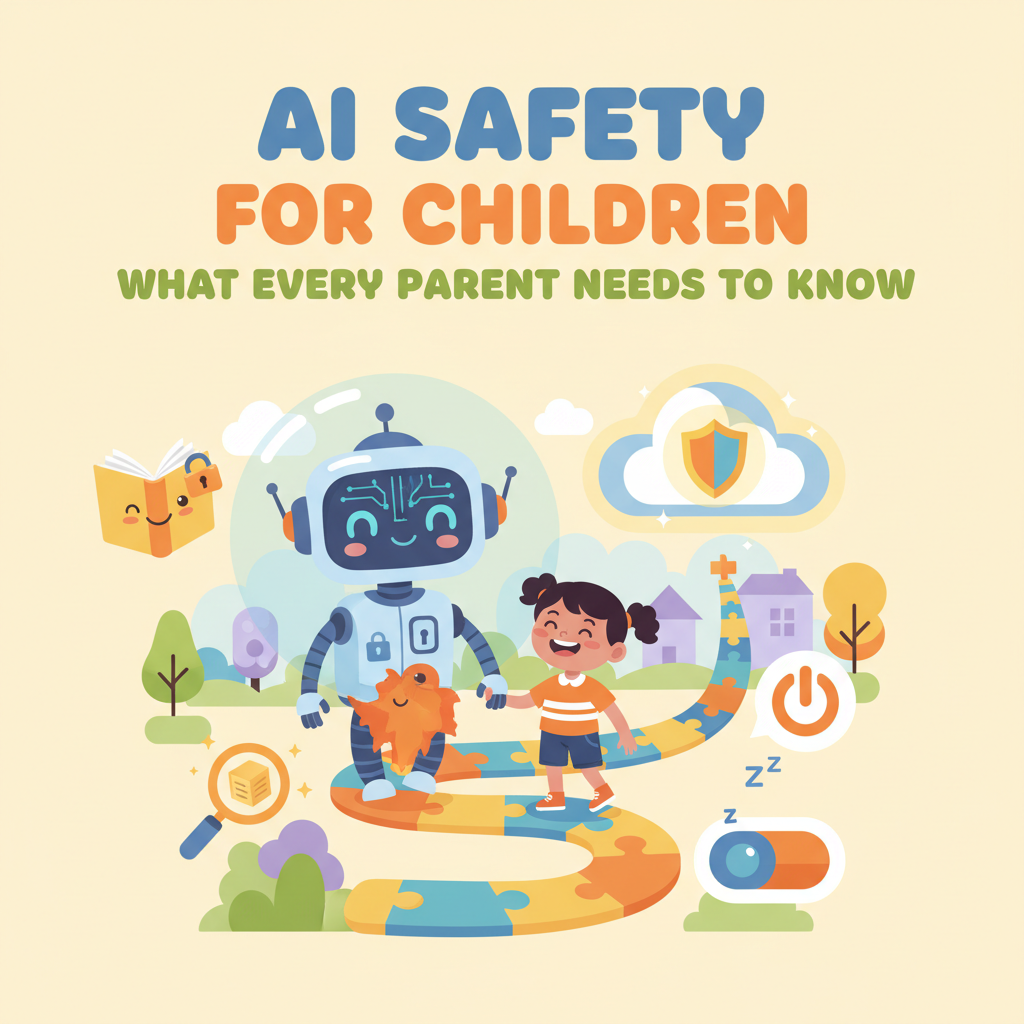
AI Safety for Children: What Every Parent Needs to Know
Learn the key strategies and insights for keeping your children safe while using AI technologies. Essential reading for every concerned parent.
Why AI Safety Matters for Your Child Right Now
Artificial intelligence is no longer a distant, futuristic concept — it's already woven into your child's daily life. From the recommendations that pop up on their favourite video platform to the chatbots they might use for homework help, AI is everywhere. And while this technology brings incredible opportunities for learning and creativity, it also introduces risks that every parent and educator needs to understand.
The good news? You don't need a computer science degree to protect your child in an AI-powered world. You just need the right knowledge, practical tools, and open conversations at home.
Understanding How AI Interacts with Children
The AI Tools Children Are Already Using
Many parents are surprised to discover just how frequently their children encounter AI. Voice assistants like Alexa and Siri, recommendation engines on YouTube and Netflix, AI-powered games, and generative tools like chatbots are all part of the modern childhood experience. Some of these tools are designed with children in mind; many are not.
The core challenge is that AI systems are built to be engaging — often compellingly so. They learn from user behaviour and optimise for attention. For a child whose brain is still developing impulse control and critical thinking, this creates a genuinely uneven playing field.
What Makes AI Different from Other Online Risks
Traditional online safety advice focuses on avoiding strangers and protecting personal information. AI adds a new layer of complexity. AI systems can:
- Generate convincing but false information that appears authoritative
- Adapt responses to feel more personal and trustworthy
- Collect and process data about behaviour and preferences
- Create realistic synthetic media (deepfakes, AI-generated images) that blur the line between real and fabricated
This means children need not just rules, but genuine AI literacy — an understanding of how these systems work and why they're designed the way they are.
The Key Risks Parents Should Know About
Privacy and Data Collection
Most AI-powered apps and platforms collect data to improve their algorithms. When children use these tools, they may unknowingly share personal information — their location, interests, browsing habits, and even voice recordings. Always read the privacy policies of apps your child uses, look for platforms that are compliant with children's data protection laws (such as COPPA in the US or the UK's Age Appropriate Design Code), and regularly audit the apps on your child's devices.
Misinformation and AI Hallucinations
AI chatbots can confidently present incorrect information as fact — a phenomenon known as "hallucination." For a child researching a school project, this is more than inconvenient; it can actively mislead their understanding. Teach children that AI tools are starting points for research, never finishing points. Everything important should be verified with a trusted second source.
Emotional Attachment and Manipulation
AI companions and chatbots are increasingly designed to feel warm, responsive, and emotionally intelligent. Some children — particularly those who are lonely, anxious, or neurodivergent — may form significant emotional bonds with AI characters or assistants. While this isn't inherently harmful, it becomes problematic when children begin to prefer AI interaction over human connection, or when they can't distinguish between genuine care and programmed responses.
Content That Isn't Age-Appropriate
Generative AI tools can produce text, images, and video that range from mildly inappropriate to deeply harmful. Even with filters in place, children can sometimes access or accidentally generate content that isn't suitable for their age. Parental controls are helpful, but conversations about what to do when (not if) they encounter something upsetting are equally important.
Building AI Literacy: The Long-Term Solution
Rules and restrictions can only take you so far. The most powerful protective tool you can give your child is understanding. A child who knows how AI works — why it makes recommendations, how it generates text, what data it collects — is far better equipped to use it safely and critically.
This is precisely the approach taken by platforms like GenAI Kids, which teaches children aged 6–16 how AI actually works through age-appropriate, engaging lessons. Rather than creating fear around technology, the goal is to build confident, curious, and critically-minded young people who can navigate an AI-powered world with skill.
Start with simple conversations at home:
- "Why do you think the app keeps suggesting that video?"
- "How do you think this chatbot knew your name?"
- "Could a computer make a mistake? What would that look like?"
These questions don't require any technical expertise from you — they just require curiosity and willingness to explore together.
Practical Tips for Parents and Educators
Here are actionable steps you can take today:
-
Have the conversation early. Don't wait until something goes wrong. Introduce the idea that computers can make mistakes and that some apps are designed to keep us hooked.
-
Use AI tools together. Sit alongside your child when they use chatbots or AI-powered apps. Model critical thinking out loud.
-
Set clear boundaries around AI use. Decide together which tools are appropriate, for how long, and for what purposes.
-
Check privacy settings regularly. Review app permissions and ensure data-sharing is minimised wherever possible.
-
Encourage verification habits. Teach children to cross-check AI-generated information with books, trusted websites, or a knowledgeable adult.
-
Explore structured AI education. Resources like GenAI Kids provide curriculum-aligned content that helps children understand AI safely and positively — great for both home learning and classroom use.
-
Create a "no blame" culture. Make sure your child knows they can come to you without fear if they see something disturbing or confusing online.
Key Takeaways
- AI is already a significant part of children's daily lives, through apps, games, and digital assistants
- Key risks include data privacy, misinformation, emotional manipulation, and inappropriate content
- AI literacy — understanding how AI works — is the most effective long-term safety strategy
- Open, ongoing conversations at home are just as important as technical controls
- Structured learning platforms like GenAI Kids can help children build genuine AI understanding from an early age
- Practical habits like verifying information and reviewing app permissions make a meaningful difference
The Bottom Line
AI safety isn't about keeping children away from technology — it's about raising children who can engage with it thoughtfully, confidently, and critically. The world your child is growing up in will be shaped by artificial intelligence in ways we're only beginning to understand. Giving them the tools to navigate that world safely is one of the most valuable things you can do as a parent or educator.
Start small. Start today. And remember — curiosity is the best safety net there is.
Ready to Start Learning AI?
Join thousands of kids on GenAI Kids — free beginner lessons, no card needed.


