How AI Is Changing the Way Kids Learn in 2025
In 2025, AI is fundamentally reshaping how kids learn, offering personalized education experiences that cater to individual needs and learning styles.
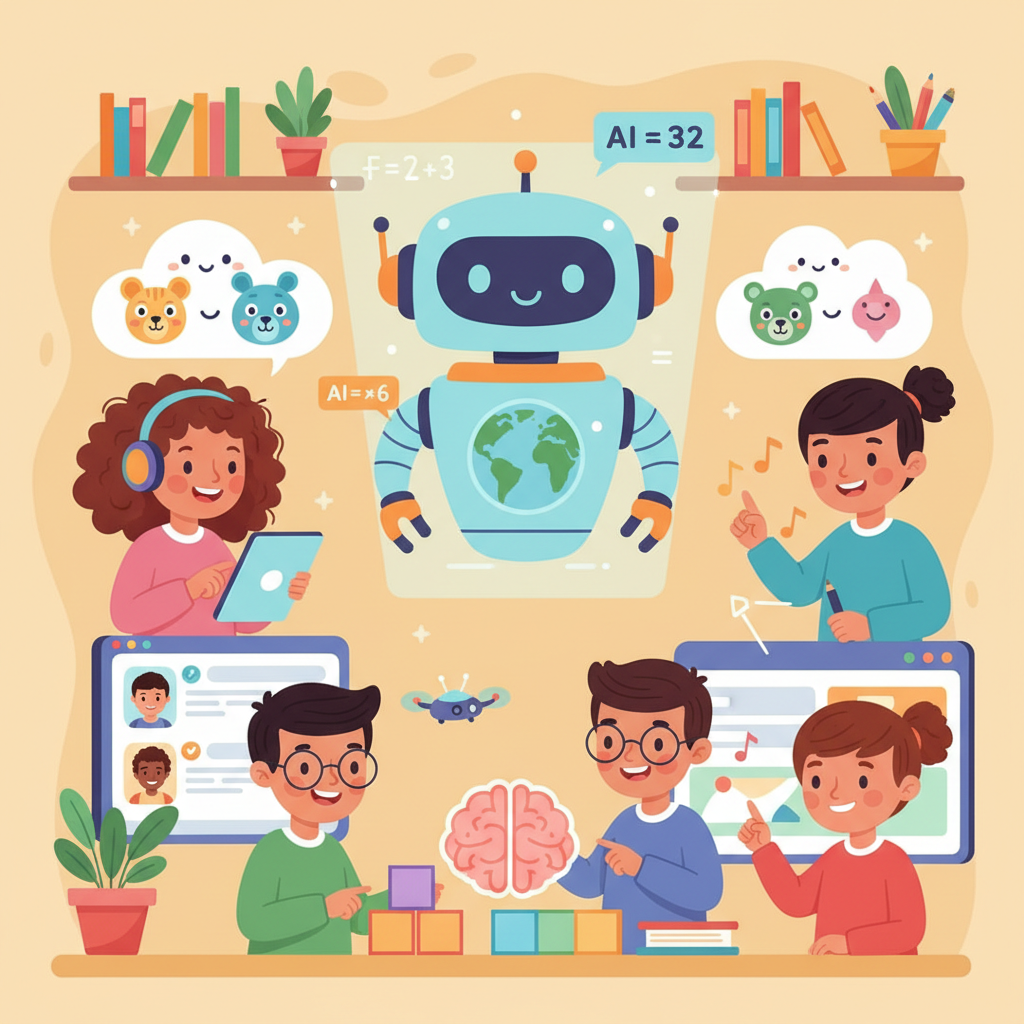
The Classroom Is Evolving — And AI Is Leading the Way
Something remarkable is happening in education right now. The same technology powering self-driving cars and medical breakthroughs is quietly transforming how children read, solve problems, and discover their passions. In 2025, artificial intelligence isn't a distant concept tucked inside science fiction — it's sitting inside your child's classroom, their homework app, and increasingly, their curiosity.
For parents and educators trying to make sense of it all, the pace of change can feel overwhelming. But here's the encouraging truth: when AI is introduced thoughtfully, it doesn't replace the magic of learning. It amplifies it. Understanding how this shift is happening is the first step toward helping the children in your life thrive in a world shaped by intelligent technology.
Personalised Learning at a Scale We've Never Seen Before
For decades, teachers have worked hard to meet every student where they are — but with 30 children in a classroom, truly personalised instruction has always been a challenge. AI is changing that equation in a meaningful way.
Adaptive Learning Platforms
Modern AI-powered platforms can assess how a child engages with material in real time, adjusting the difficulty, pacing, and even the format of content based on their responses. A student who struggles with fractions might receive additional visual explanations and hands-on practice problems, while a classmate who's ready to advance gets stretched into more complex concepts — all within the same lesson.
This isn't just convenient. Research consistently shows that students learn more deeply when content is pitched at the right level. AI makes that precision scalable, which means more children can experience the confidence boost that comes from genuinely understanding something, not just memorising it.
Emotional and Engagement Signals
Some of the most advanced edtech tools in 2025 are beginning to read engagement cues — noticing when a student seems confused, distracted, or disengaged and adapting accordingly. While these tools come with important privacy considerations (more on that below), they represent a shift toward learning environments that are genuinely responsive to the child as an individual.
AI as a Creative and Critical Thinking Partner
One of the most exciting developments in AI-assisted education is its role not just as a tutor, but as a thinking partner. Rather than simply delivering answers, well-designed AI tools encourage children to ask better questions, explore ideas from multiple angles, and build the kind of critical reasoning skills that will serve them for life.
Learning About AI, Not Just With It
There's an important distinction between using AI as a passive tool and developing genuine AI literacy. Children who understand how AI systems work — including their limitations and biases — are far better equipped to use technology responsibly and creatively.
Platforms like GenAI Kids are specifically designed to bridge this gap, teaching children aged 6–16 not just how to interact with AI, but how to think about it. This foundational literacy is becoming as essential as reading and mathematics in the modern world.
The Challenges Parents and Educators Need to Know About
A balanced picture of AI in education means acknowledging the real challenges alongside the opportunities.
Screen Time and Dependency
AI-powered tools can be highly engaging — sometimes to a fault. If children come to rely on AI prompts to complete every task, there's a risk of short-circuiting the productive struggle that builds genuine understanding. The goal should always be to use AI as a scaffold, not a crutch.
Data Privacy and Safety
Many AI learning platforms collect significant amounts of data to function effectively. Parents and school administrators should ask clear questions: What data is being collected? How is it stored? Who has access to it? Choosing platforms with transparent, child-safe data policies is non-negotiable.
Equity and Access
Not every child has equal access to the devices and internet connections that power these tools. As AI-enhanced learning becomes more prevalent, it's critical that schools and policymakers actively work to close — not widen — the digital divide.
Practical Tips for Parents and Educators
Supporting children through this shift doesn't require a degree in computer science. Here are concrete steps you can take right now:
For Parents:
- Start conversations early. Ask your child what they know about AI. Their answers might surprise you — and the conversation itself builds critical thinking.
- Explore together. Rather than handing over a device, sit alongside your child when they first use an AI-powered learning tool. Ask questions: "Why do you think it gave that answer? Is that always true?"
- Balance is everything. AI tools should complement unstructured play, creative projects, and face-to-face learning — not replace them.
- Check the credentials. Look for platforms built specifically for children's education, like GenAI Kids, that prioritise age-appropriate content and digital safety.
For Educators:
- Integrate AI literacy into existing subjects. You don't need a separate "AI class" to start. Discussing how an AI recommendation system works fits naturally into a media literacy lesson.
- Model thoughtful use. Show students how you evaluate AI-generated content critically, demonstrating that the technology is a starting point, not a final answer.
- Collaborate with parents. Share the tools you're using in the classroom and explain why. Parental understanding reduces anxiety and builds a consistent learning experience at home and school.
Key Takeaways
- AI is enabling genuinely personalised learning at scale, helping more children access content suited to their individual level and pace.
- Building AI literacy — understanding how these tools work — is as important as using them effectively.
- Key challenges include screen dependency, data privacy, and unequal access; all are manageable with informed, proactive decisions.
- Parents and educators don't need to be tech experts — curiosity, conversation, and critical thinking are the most powerful tools available.
- Resources like GenAI Kids are helping make age-appropriate AI education accessible for children across the 6–16 age range.
The Future Belongs to Curious, Informed Kids
AI isn't going to slow down — and that's ultimately good news for children who are prepared to meet it with confidence and understanding. The role of parents and educators isn't to protect children from this technology, but to help them engage with it wisely, creatively, and on their own terms.
The children who will thrive in the decades ahead won't simply be the ones who use AI the most. They'll be the ones who understand it, question it, and know how to harness it in service of genuinely human goals.
That journey starts with a conversation. Why not begin one today?
Ready to Start Learning AI?
Join thousands of kids on GenAI Kids — free beginner lessons, no card needed.


