How GenAI Kids Turns Screen Time Into Learning Time
Unlock your child's potential by transforming screen time into an enriching learning experience with GenAI Kids, where education meets fun!
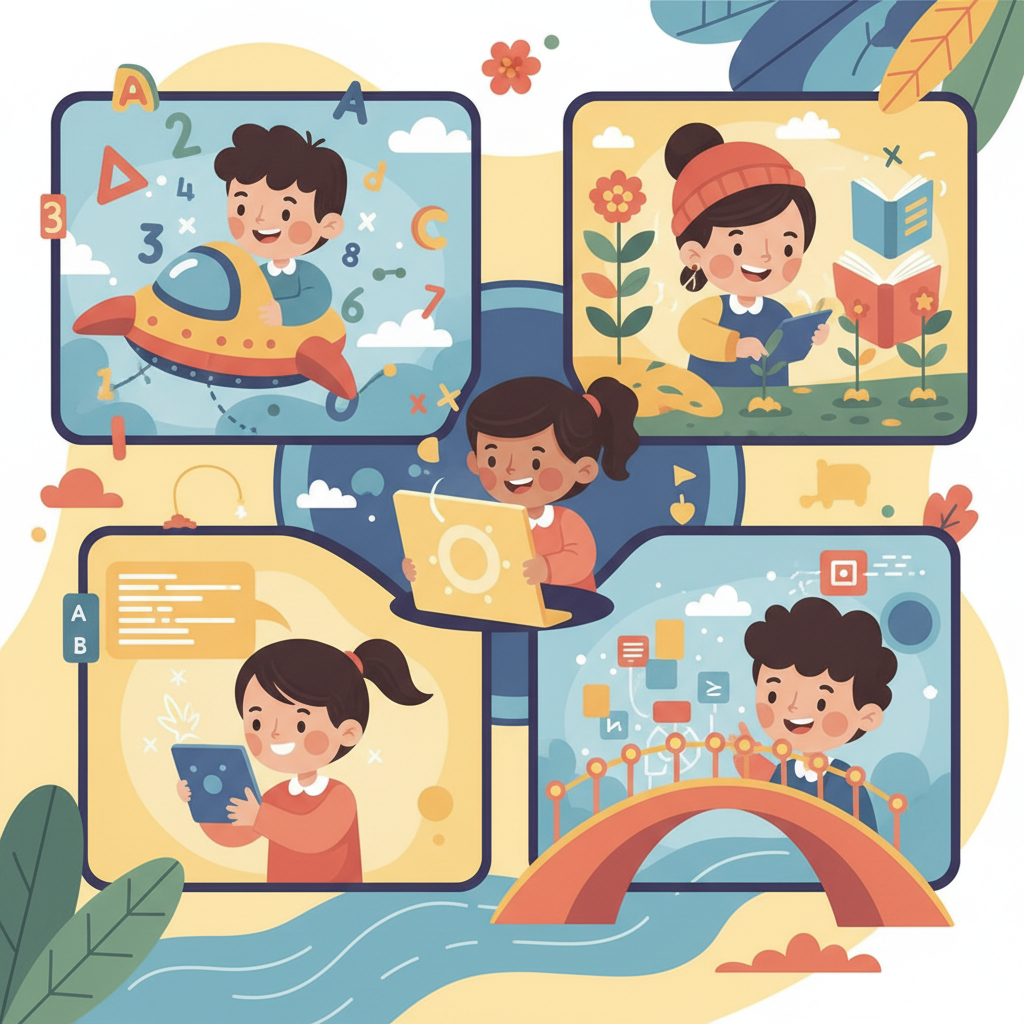
The Screen Time Dilemma Every Parent Knows
It's a familiar scene: a child glued to a tablet, eyes wide, completely absorbed — and a parent nearby wondering whether what's happening on that screen is good for them or not. Screen time has become one of the defining anxieties of modern parenting, and for good reason. Not all screen time is created equal. The difference between a child passively watching random videos and actively building skills that will shape their future couldn't be more significant.
The good news? The conversation is shifting. Educators and child development researchers are increasingly drawing a line between passive screen time and purposeful screen time — and that distinction changes everything. When children engage with technology intentionally, learning real skills in an interactive environment, screens become something far more valuable than a distraction. They become a doorway.
Why Screen Time Gets Such a Bad Reputation
Let's be honest about where the concern comes from. Studies linking excessive screen time to reduced attention spans, disrupted sleep, and decreased social interaction are real, and parents are right to pay attention to them. The problem, however, is rarely the screen itself — it's the content and context surrounding it.
Endless scrolling, autoplay videos, and passive entertainment are designed to consume attention without giving much back. Children absorb rather than think, react rather than create. Over time, that pattern can crowd out the deeper cognitive work that growing brains genuinely need.
The Difference Between Consuming and Creating
Purposeful screen time flips this dynamic entirely. When a child is asked to solve a problem, experiment with an idea, reflect on how something works, or build something — even digitally — their brain is doing something fundamentally different. They're exercising curiosity, logical thinking, and creativity.
This is the foundation of what makes AI literacy education so powerful for young learners. Rather than simply using technology, children begin to understand it — asking questions like "Why did the computer respond that way?" or "How does it know what I'm asking?" These are exactly the kinds of critical thinking habits we want children developing early.
What AI Literacy Actually Looks Like for Children
Teaching children about artificial intelligence doesn't mean overwhelming them with algorithms and technical jargon. Age-appropriate AI education is about building intuition — helping children develop a healthy, informed relationship with the technology that is already shaping their world.
For younger children (ages 6–9), this might look like exploring how computers recognise patterns, or understanding that apps and smart toys are following instructions created by people. For older children and teens, it can expand into understanding machine learning concepts, recognising bias in data, discussing the ethics of AI decision-making, and even experimenting with simple AI tools in guided, structured ways.
Skills That Transfer Beyond the Screen
The real value of AI literacy isn't just knowing what AI is — it's the transferable skills that come with it:
- Critical thinking: Evaluating information sources and understanding how algorithms curate what we see
- Problem-solving: Breaking complex questions into smaller, testable steps
- Digital citizenship: Understanding privacy, data, and responsible technology use
- Creative confidence: Using AI tools as creative partners rather than passive consumers
- Future readiness: Building familiarity with a technology landscape that will define their careers
These are skills that matter whether a child grows up to be a software engineer, a teacher, an artist, or an entrepreneur.
How Structured Learning Transforms the Experience
One of the most important factors in making screen time genuinely educational is structure. A child left alone with even a great resource will absorb far less than one who is gently guided through concepts, encouraged to ask questions, and given the chance to reflect on what they've learned.
This is where platforms like GenAI Kids make a meaningful difference. Rather than offering a passive library of content, structured AI education for children builds learning progressively — introducing concepts in layers, connecting ideas across lessons, and making space for the kind of "aha" moments that stick. Children aren't just watching someone explain AI; they're engaging with it, discussing it, and building genuine understanding over time.
Good structured learning also gives parents and educators a window into what children are discovering. That shared vocabulary — when a child comes home excited to explain how a recommendation algorithm works — creates opportunities for the kind of conversations that deepen learning further.
Practical Tips for Parents and Educators
Transforming screen time into learning time doesn't require a complete overhaul of your household or classroom. Here are some straightforward, actionable ways to get started:
At home:
- Set a purpose before the session begins. Ask your child, "What do you want to learn or make today?" A simple question sets an intentional tone.
- Watch and discuss together when you can. Even 10 minutes of shared engagement followed by a conversation dramatically increases retention and understanding.
- Create a "what did you discover?" ritual. Make reflection part of the routine — at dinner, on the car ride home, or at bedtime.
- Balance creation with consumption. For every 30 minutes of watching or reading, encourage 15 minutes of making, experimenting, or discussing.
In the classroom:
- Connect digital learning to offline projects. AI concepts can inspire art projects, debates, journaling, and science experiments that extend learning away from screens.
- Normalise big questions. "Is this fair?" and "Who made this decision?" are questions children can ask about AI — and they're great for classroom discussion.
- Use resources that grow with your students. Platforms like GenAI Kids are designed to scaffold learning across age groups, making them a practical long-term resource rather than a one-time novelty.
Key Takeaways
- Not all screen time is equal — purposeful, structured screen time builds real skills
- AI literacy education helps children think critically about the technology shaping their lives
- The best digital learning develops transferable skills: problem-solving, critical thinking, and creative confidence
- Structure and reflection dramatically increase the value of any screen-based learning
- Parents and educators play a vital role in turning screen time into a conversation, not just an activity
The Screen Is Just the Beginning
Technology is not going away — and truthfully, we wouldn't want it to. The goal was never to eliminate screens from children's lives, but to ensure that what happens on those screens is working for them, not just at them.
When children learn to understand AI rather than simply use it, they step into a far more empowered relationship with the world they're growing up in. They become curious, confident, and critically aware — exactly the qualities every parent and educator hopes to nurture.
If you're ready to explore what purposeful AI learning looks like in practice, GenAI Kids offers a thoughtfully designed curriculum that meets children where they are and grows with them every step of the way. Because the best screen time? It's the kind that sparks a conversation long after the screen is off.
Ready to Start Learning AI?
Join thousands of kids on GenAI Kids — free beginner lessons, no card needed.


