How GenAI Kids Turns Screen Time Into Learning Time: 2026 Parent Guide
Turn your child's screen time into a productive learning experience with our 2026 guide on the best GenAI tools designed for curious young minds.
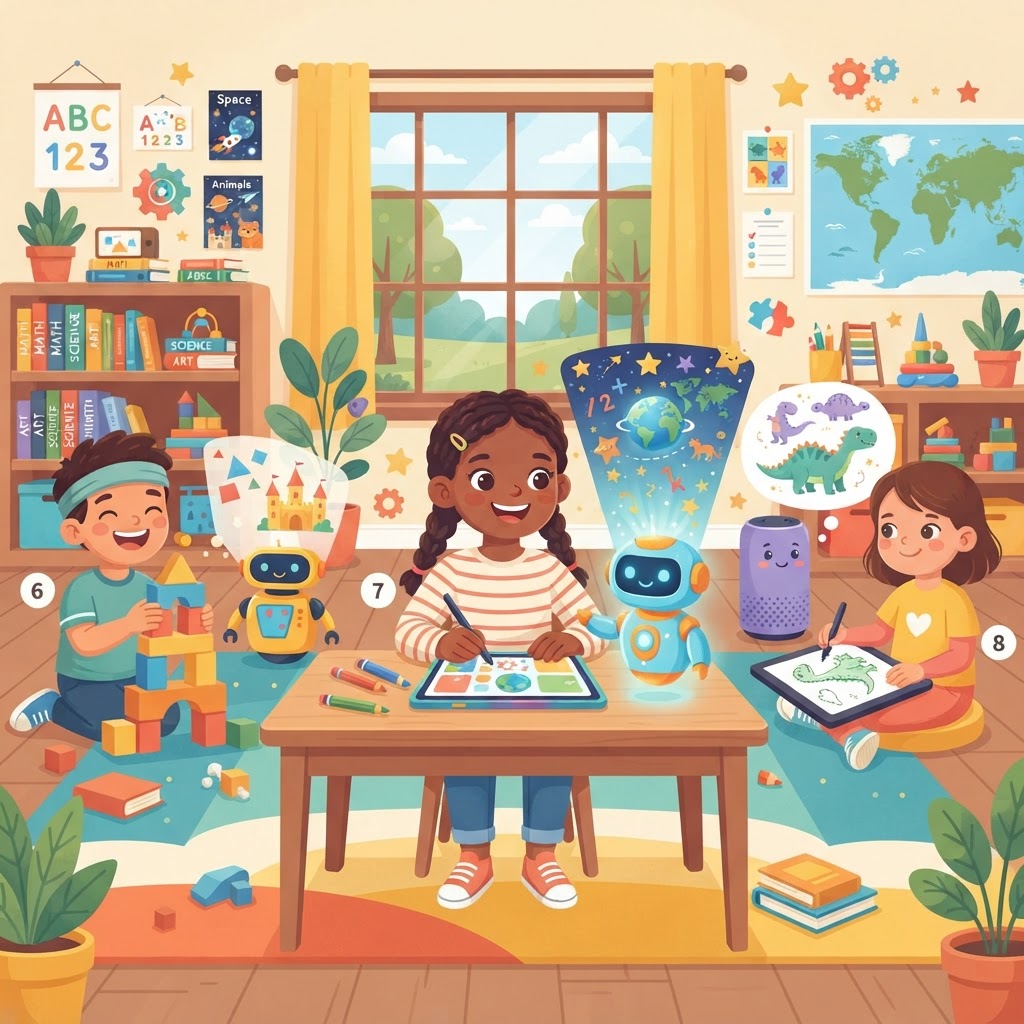
Why Screen Time Doesn't Have to Be a Battle
Every parent knows the feeling. You glance over at your child, and they're deep in a digital world — eyes fixed, fingers moving, completely absorbed. The question isn't whether screens are part of childhood anymore. They absolutely are. The real question is: what are those screens teaching?
The conversation around screen time has shifted dramatically heading into 2026. Researchers, educators, and child development specialists are moving away from simply counting hours and towards asking a far more important question: is this screen time purposeful? When children engage with content that builds genuine skills — critical thinking, creativity, problem-solving — the picture looks very different from passive scrolling or repetitive gaming.
Artificial intelligence literacy is quickly becoming one of the most valuable skills a child can develop. The children learning how AI works today are the ones who will shape, design, and lead with it tomorrow. Turning screen time into that kind of meaningful learning time isn't just possible — with the right approach, it's surprisingly natural.
Understanding the Difference Between Passive and Active Screen Time
Not all screen time is created equal, and science backs this up. Researchers distinguish between passive consumption (watching videos, scrolling feeds) and active engagement (creating, problem-solving, learning interactively). The latter activates higher-order thinking skills and produces measurable developmental benefits.
What Passive Screen Time Looks Like
- Watching back-to-back videos without a learning goal
- Scrolling through short-form content reactively
- Playing games that require minimal strategic thinking
- Consuming content without reflection or discussion afterwards
What Active, Educational Screen Time Looks Like
- Following interactive lessons with questions and challenges
- Building or creating something using digital tools
- Exploring concepts that connect to the real world
- Discussing what they've learned with a parent or educator
The key distinction is engagement with intention. When a child understands why they're on a screen and has a goal to work towards, the cognitive experience is fundamentally different. This is exactly the design principle behind platforms like GenAI Kids, which structures learning so children are always doing, thinking, and building — not just watching.
Making AI Education Part of Your Child's Routine
One of the most common concerns parents share is that AI sounds too complex for young children. In reality, children aged 6–16 are remarkably capable of grasping foundational AI concepts when they're introduced through age-appropriate language, stories, and hands-on activities.
Starting With Curiosity, Not Complexity
The best entry point isn't a textbook definition of machine learning — it's a question your child is already asking. How does Spotify know what song to play next? Why does my phone recognise my face? How does autocorrect know what I mean? These everyday moments are perfect springboards for AI conversations.
Try building short, regular habits rather than long occasional sessions:
- 10–15 minutes after school exploring one AI concept together
- Weekend project time where your child explains something they've learned to you
- Dinner table conversations about AI they've noticed in daily life
Consistency matters far more than duration. Short, frequent engagement builds genuine understanding over time.
Aligning Screen Learning With School Subjects
AI education doesn't have to exist in a silo. Many core curriculum areas connect naturally to AI concepts:
- Maths → How algorithms make decisions using data and probability
- English/Writing → How language models process and generate text
- Science → How AI assists in fields like medicine, climate research, and biology
- Art and Design → How generative AI creates images and what that means for creativity
When children see these connections, learning becomes cohesive rather than compartmentalised. Educators can use this as an opportunity to weave AI literacy into existing lesson planning rather than treating it as an entirely separate subject.
Practical Tips for Parents: Turning Any Screen Session Into a Learning Opportunity
You don't need to overhaul your household tech rules overnight. Small, consistent shifts in how you engage with your child's screen time can make a significant difference.
1. Ask "what did you learn?" not "what did you watch?" Reframing the post-screen conversation shifts children into reflective thinking. Even if they struggle to answer at first, the habit of reflection builds over time.
2. Explore together, at least occasionally Sitting alongside your child — even for just five minutes — sends a powerful message that their learning matters. It also gives you a window into what they're actually engaging with.
3. Use AI tools as teaching moments, not shortcuts When your child wants to use an AI chatbot or tool, turn it into an interactive lesson. Ask: How do you think it came up with that answer? What did it get right? What did it miss?
4. Choose platforms designed for learning Not all "educational" apps deliver genuine learning outcomes. Look for platforms with structured curricula, age-appropriate progression, and content reviewed by educators. GenAI Kids is purpose-built for this — with courses designed specifically for children across different age groups and learning stages.
5. Set goals, not just limits Instead of only limiting screen time, try setting a learning goal: "Before your free screen time, let's spend 15 minutes on your AI lesson." This creates a positive framework rather than a purely restrictive one.
Key Takeaways
- Screen time quality matters more than quantity — focus on active, purposeful engagement
- Children aged 6–16 can genuinely understand AI concepts when taught age-appropriately
- Short, consistent learning habits are more effective than long, infrequent sessions
- AI education connects naturally to core school subjects like maths, science, and English
- Parents and educators play a crucial role in framing screens as learning tools
- Asking reflective questions after screen time builds critical thinking habits
- Purpose-built learning platforms make structured AI education accessible for families
The Screen Time You'll Feel Good About
The goal was never to eliminate screens from childhood — it was always to make sure children were getting something real from them. AI literacy isn't a niche skill reserved for future engineers or tech professionals. It's foundational knowledge for navigating a world that's already deeply shaped by artificial intelligence, and growing more so every year.
When children understand how AI works — how it learns, where it succeeds, and where it falls short — they become thoughtful, confident participants in the digital world rather than passive recipients of it.
If you're ready to turn your child's screen time into genuine learning time, explore what GenAI Kids has to offer. The future is being shaped right now — and your child deserves a seat at the table.
Ready to Start Learning AI?
Join thousands of kids on GenAI Kids — free beginner lessons, no card needed.


