How to Explain Machine Learning to Your 10-Year-Old
Learn how to break down the basics of machine learning for your child in an engaging way that sparks their curiosity and understanding.
Why Machine Learning Feels Complicated (And Why It Doesn't Have to Be)
If you've ever tried explaining machine learning to a curious ten-year-old, you know the feeling: you start with something like "it's when computers learn on their own," and within seconds you're fielding follow-up questions you're not quite sure how to answer. Don't worry — you're not alone, and you don't need a computer science degree to have this conversation well.
Machine learning is one of the most important technologies shaping the world your child will grow up in. From the recommendations on their favourite streaming platform to the voice assistant they argue with about the weather, machine learning is quietly running in the background. Helping children understand it — even at a basic level — gives them a meaningful advantage: the ability to think critically about the technology around them, rather than simply being swept along by it.
The good news? With the right analogies and a little patience, this is a conversation any parent or educator can have.
So, What Is Machine Learning? (In Plain English)
At its core, machine learning is a way of teaching computers to get better at tasks by giving them lots of examples, rather than writing out every rule manually.
Think of it this way. If you wanted to teach a young child to recognise a dog, you wouldn't hand them a 200-page rulebook describing fur patterns, ear shapes, and tail lengths. You'd simply show them dogs. Lots of dogs. A golden retriever, a poodle, a tiny chihuahua — and eventually, the child learns to recognise "dog" on their own, even when they see a breed they've never encountered before.
Machine learning works in almost exactly the same way. Instead of a child, we have a computer program. Instead of eyes, it processes data. And instead of a curious brain, it uses mathematical patterns called models to make predictions or decisions.
A Simple Analogy Your Child Will Actually Get
Here's one that tends to land brilliantly with kids around ten:
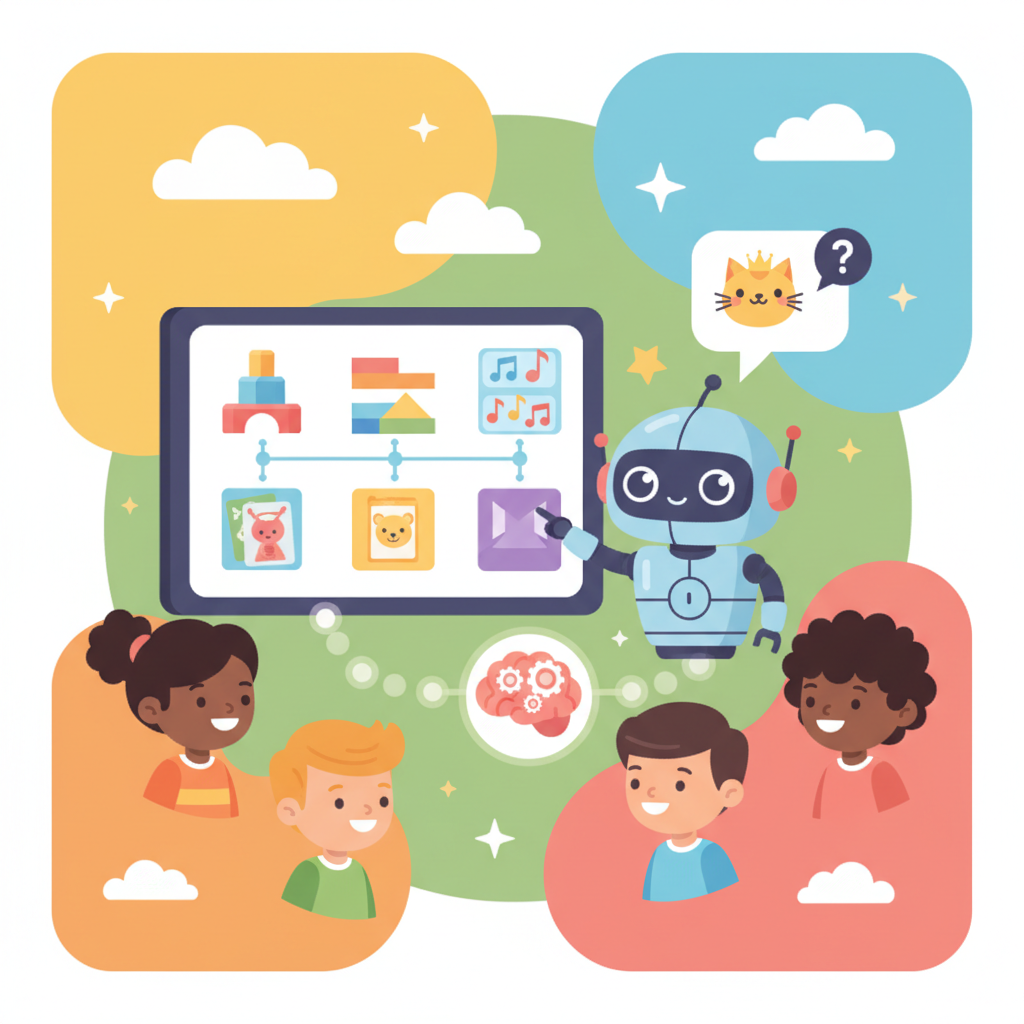
"Imagine you're teaching a robot to tell the difference between a cat and a dog. You show it 10,000 photos labelled 'cat' or 'dog.' The robot studies them, notices patterns — pointy ears here, whiskers there — and eventually starts making its own guesses. The more photos it sees, the better it gets. That's machine learning."
This analogy works because it mirrors something children already understand: practice makes you better. The computer is, in a very real sense, practising.
Why Machine Learning Matters for Kids to Understand
Understanding machine learning isn't just for future programmers. It's increasingly a form of digital literacy — as essential as understanding how advertising works or why some information online isn't reliable.
Here are a few everyday examples worth exploring with your child:
- Streaming recommendations — Why does Netflix seem to know what you want to watch next? Machine learning analyses your viewing history and compares it to millions of other users.
- Email spam filters — How does your inbox know to send strange emails straight to junk? A machine learning model has been trained on millions of examples of spam.
- Autocorrect and autocomplete — When your phone suggests the next word in a message, it's using a language model trained on vast amounts of text.
When children see these connections, machine learning stops being an abstract concept and becomes something they interact with every single day. That shift in perspective is powerful.
How to Have the Conversation at Home or in the Classroom
You don't need a whiteboard or a PowerPoint presentation. Some of the best learning happens in ordinary moments.
Start with curiosity, not a lecture
Ask questions rather than delivering information. Try: "Have you ever wondered how Spotify knows which songs you might like?" or "Why do you think YouTube keeps suggesting similar videos?" Let their curiosity lead — you're there to guide, not instruct.
Use hands-on activities
Children aged 8–12 respond brilliantly to doing, not just listening. Some ideas:
- Sorting games: Have your child sort a pile of objects into categories. Then ask: "What rules did you use? Could you teach those rules to a robot?" This mirrors exactly how supervised machine learning works.
- Drawing recognition tools: There are free, browser-based tools (like Google's Quick, Draw!) that use machine learning to guess what a child is sketching in real time. Kids find these genuinely magical — and deeply educational.
- Train a simple model: Platforms like GenAI Kids offer age-appropriate, interactive activities where children can experiment with machine learning concepts without needing any coding experience.
Normalise not knowing everything
It's absolutely fine to say "I'm not sure — let's find out together." In fact, modelling intellectual curiosity is one of the best things an adult can do. Machine learning is a fast-moving field. Nobody knows everything about it.
Key Takeaways
- Machine learning teaches computers through examples, not explicit rules — just like we teach children.
- The best explanations use analogies from everyday life: dogs and cats, music playlists, spam filters.
- Children don't need to code to understand machine learning — they need conceptual literacy.
- Hands-on activities (sorting games, drawing tools, interactive platforms) make abstract ideas stick.
- Framing these conversations as explorations, not lessons keeps children engaged and curious.
- Resources like GenAI Kids are designed specifically to make these concepts accessible, safe, and fun for children aged 6–16.
Practical Tips to Keep the Learning Going
- Watch together: Short YouTube documentaries aimed at young audiences can spark great dinner-table conversations.
- Ask "how do you think it works?" whenever you encounter AI in daily life — a voice assistant, a recommended ad, a facial recognition unlock screen.
- Celebrate the questions: When a child asks something you can't answer, treat it as a win. That curiosity is exactly the mindset the future needs.
- Revisit the topic regularly: Understanding deepens over time. A conversation today plants a seed; another one next month helps it grow.
The Conversation Is Worth Starting Today
Machine learning will shape nearly every aspect of your child's future — the jobs available to them, the tools they'll use, the decisions that will affect their lives. Children who grow up understanding these systems will be far better equipped to participate in shaping them, rather than simply being shaped by them.
You don't need to master the mathematics. You just need to start the conversation.
If you're looking for a structured, child-friendly way to continue that journey, GenAI Kids offers guided learning paths built specifically for young learners — helping them move from curiosity to genuine understanding, one concept at a time. Explore the platform today and discover how approachable AI education can really be.
Ready to Start Learning AI?
Join thousands of kids on GenAI Kids — free beginner lessons, no card needed.


