How to Explain Machine Learning to Your 10-Year-Old
Learn how to break down machine learning concepts for your 10-year-old in a fun and engaging way, making technology accessible to everyone.
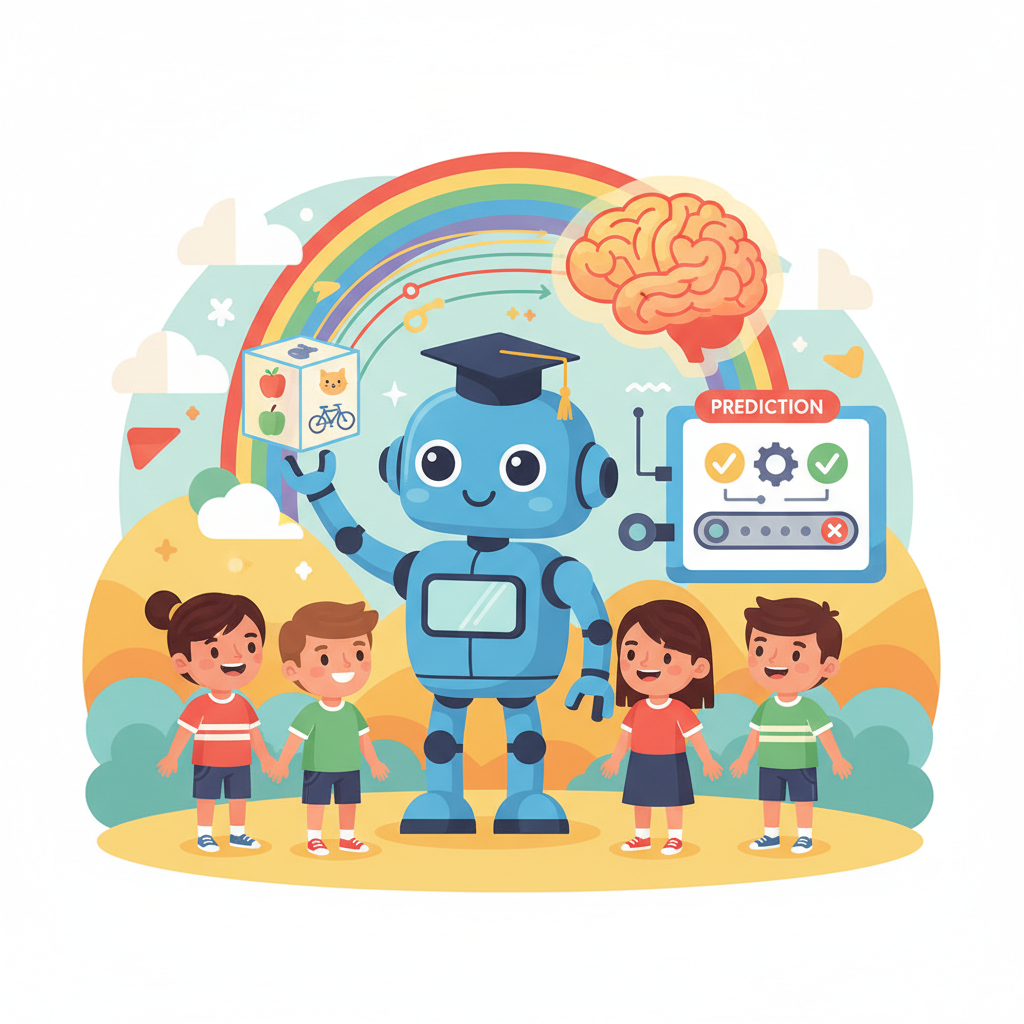
Why Machine Learning Feels So Mysterious — And Doesn't Have to
If you've ever tried to explain machine learning to a curious 10-year-old and found yourself trailing off mid-sentence, you're in good company. Even adults who work in tech sometimes struggle to describe what machine learning actually is in plain English. The good news? Children are naturally wired for the kind of thinking that makes machine learning click. They learn by example, they spot patterns instinctively, and they adapt constantly. Sound familiar? That's because those are exactly the principles behind machine learning itself.
This guide will walk you through how to have that conversation confidently — no computer science degree required.
What Machine Learning Actually Is (In Plain English)
Before you can explain it to your child, it helps to have a clear definition in your own mind.
Machine learning is a type of artificial intelligence where a computer program learns from experience, rather than being given a fixed set of rules. Instead of a programmer writing instructions for every possible situation, the machine is shown thousands of examples and figures out the patterns on its own.
Think of it this way: when you teach a child to recognise a dog, you don't hand them a rulebook listing every breed, size, and colour. You show them lots of dogs — fluffy ones, tiny ones, big ones — and eventually, they just know what a dog looks like. Machine learning works in a surprisingly similar way.
The Three Words That Make It Simple
When talking to your 10-year-old, try anchoring the concept in three simple words:
- Examples — the machine learns from data (lots and lots of examples)
- Patterns — it finds what those examples have in common
- Predictions — it uses those patterns to make smart guesses about new things
That's it. Everything else — neural networks, algorithms, training data — is just a more detailed version of that core idea.
Relatable Analogies That Actually Work for Kids
The fastest route to understanding is a great analogy. Here are three that consistently land well with children around age 10.
The Spam Filter Story
Ask your child if they've ever seen a "junk mail" folder in someone's email. Explain that a machine learning model read millions of emails and learned which ones were spam (by noticing things like suspicious words, strange senders, or too-many exclamation marks!!). Now it can spot a new spam email it has never seen before — because it recognises the pattern.
The Music Recommender
Does your child use YouTube or a music streaming app? Ask them: "Have you ever noticed how it seems to know what song you want to hear next?" That's machine learning. The system learned from millions of listeners — what they skipped, what they replayed, what they listened to back-to-back — and now it predicts what your child will enjoy. It feels almost magical, but it's really just very clever pattern-spotting.
Teaching a Baby vs. Teaching a Robot
This one is wonderfully intuitive for kids. Ask: "How did you learn what a cat was?" Nobody gave them a definition. They saw cats, heard the word repeated, and built the association themselves. Machine learning models are trained in a similar spirit — exposed to examples until the pattern becomes clear. The difference is that machines need far more examples than a child does, and they can't yet understand why something is the way it is. That nuance often sparks fantastic follow-up questions.
Common Questions Kids Ask — and How to Answer Them
Once the concept clicks, prepare for a flood of brilliant questions. Here are some of the most common ones and suggested responses.
"Does the computer actually think?"
"Not the way you do. It's very good at finding patterns in numbers, but it doesn't understand what those numbers mean the way you understand the world around you."
"Can it get things wrong?"
"Absolutely — and that's one of the most important things to know about it. If the examples it learned from were wrong or incomplete, its answers will be too. That's why humans need to stay involved and check its work." This is a brilliant opportunity to start an age-appropriate conversation about AI ethics and responsibility.
"Could I build one?"
The answer — and this often delights children — is yes. With the right tools and guidance, even a 10-year-old can train a simple machine learning model. Platforms like GenAI Kids are designed precisely for this, offering hands-on, age-appropriate projects that let children experiment with real AI concepts in a safe, structured environment.
Practical Tips for Parents and Educators
Ready to go beyond the conversation? Here's how to keep the learning momentum going.
- Start with what they already love. Gaming, music, animals, sport — there's an AI application in every interest. Connect the concept to their world first.
- Watch something together. Short, visual explainers on reputable platforms can reinforce what you've discussed. Even a five-minute video can cement an abstract idea.
- Encourage questions over answers. The goal isn't for your child to memorise a definition. It's for them to feel comfortable asking how does that work? whenever they encounter technology.
- Try a hands-on project. Look for beginner-friendly tools where children can train a simple image or text classifier. Seeing a model they built make a prediction is an unforgettable moment. GenAI Kids offers structured, curriculum-aligned projects that are perfect for this.
- Normalise not knowing. AI is evolving rapidly. It's completely fine to say "I'm not sure — let's find out together." That models exactly the kind of curiosity and intellectual honesty we want children to develop.
- Revisit the conversation. Understanding deepens over time. A brief chat today, a project next week, and a documentary next month will do far more than one intensive session.
Key Takeaways
- Machine learning is how computers learn from examples rather than fixed rules — just like children learn from experience.
- Relatable analogies (spam filters, music apps, recognising animals) make the concept click quickly for 10-year-olds.
- Children's natural questions about AI — can it be wrong? can I build one? — are fantastic springboards for deeper learning.
- Hands-on projects are the most powerful way to move from understanding to genuine excitement.
- You don't need to be a tech expert to have this conversation well — curiosity and openness matter far more.
Start the Journey Today
Machine learning isn't a distant, adult concept. It's already woven into the apps, games, and platforms your child uses every single day. Giving them the language and the confidence to understand it doesn't just prepare them for the future — it empowers them to engage with the present more thoughtfully and critically.
If you're looking for a structured, joyful way to continue this learning journey, GenAI Kids is built for exactly this moment — turning curiosity into capability, one concept at a time. Explore our age-appropriate courses and let your child discover that AI isn't something that happens to them. It's something they can learn to shape.
Ready to Start Learning AI?
Join thousands of kids on GenAI Kids — free beginner lessons, no card needed.


