Real AI Careers: What Jobs Will Your Child Have in 2035
Prepare your child for the future with insights on AI careers emerging by 2035. Explore the skills they’ll need to thrive in a tech-centric job market.
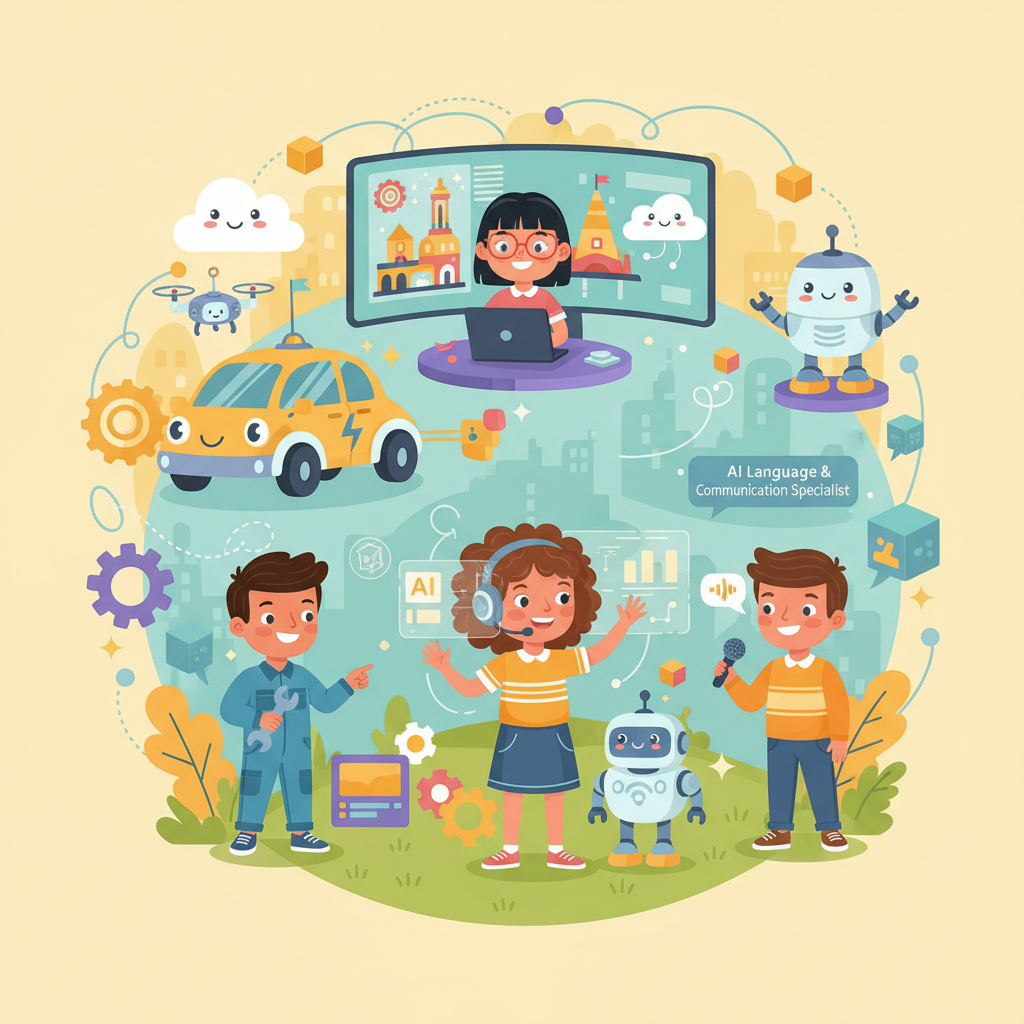
The Jobs of Tomorrow Are Being Built Today
Picture this: your child comes home from school, excited to tell you about the AI system they helped design — one that's diagnosing rare diseases, composing personalised music, or predicting climate patterns. Sound like science fiction? By 2035, scenarios like these won't just be possible. They'll be Tuesday afternoon at the office.
The world of work is shifting faster than at any point in human history. Artificial intelligence isn't simply automating old jobs — it's creating entirely new categories of work that didn't exist five years ago, let alone a generation ago. For parents and educators, understanding this landscape isn't optional. It's one of the most important things you can do to help the children in your life thrive.
So let's take a clear-eyed, practical look at the real AI careers emerging right now — and what your child needs to start preparing.
Why AI Careers Are Different from "Tech Jobs" of the Past
Many parents remember being told to encourage their children toward coding or computer science as a catch-all path into the tech industry. While those skills still have value, the AI era demands something broader and more nuanced.
AI careers sit at the intersection of technical skill, creative thinking, and human understanding. The most in-demand roles aren't purely about writing code — they're about training AI systems to behave ethically, interpreting what AI outputs actually mean, and designing experiences that genuinely serve people.
According to the World Economic Forum's Future of Jobs Report, more than 85 million jobs may be displaced by AI automation by 2025 — but 97 million new roles are expected to emerge. The children in classrooms today will fill those roles. The question is whether they'll be equipped to do so.
Real AI Careers Your Child Could Have by 2035
AI Trainer and Prompt Engineer
Every AI system needs to be taught. AI trainers feed models with data, correct errors, and refine how an AI responds to real-world scenarios. Prompt engineers — already one of the most sought-after roles in tech — craft the precise instructions that guide AI tools to produce useful, accurate, and safe results.
These roles blend language skills with logical thinking, making them accessible to children who love writing, storytelling, or problem-solving — not just those who gravitate toward maths.
AI Ethics Officer and Responsible AI Auditor
As AI systems become embedded in healthcare, education, law, and finance, someone needs to ask the hard questions: Is this fair? Could this cause harm? Who's accountable when it goes wrong?
AI ethics officers work with companies and governments to ensure AI systems are transparent, unbiased, and trustworthy. This is a career path that rewards children with strong critical thinking, empathy, and a sense of social justice — qualities that no algorithm can replicate.
Human-AI Interaction Designer
UX (user experience) design has long been a respected field, but the rise of AI creates an entirely new discipline: designing the relationship between humans and intelligent systems. How should a healthcare AI communicate a difficult diagnosis? How do we make sure elderly users feel comfortable with AI assistants?
Children who are curious, empathetic, and creative — especially those who love art, psychology, or design — could find a natural home here.
AI Systems Analyst and Data Storyteller
Raw AI outputs are only valuable if someone can interpret and communicate them. Data storytellers translate complex AI-generated insights into clear narratives for business leaders, policymakers, and the public. Systems analysts ensure AI tools are integrated effectively across organisations.
These roles reward children who enjoy both analytical thinking and communication — a powerful combination that's surprisingly rare.
The Skills That Will Matter Most
Knowing which jobs are coming is only half the battle. Understanding what skills to cultivate is where parents and educators can make the biggest difference.
Technical Fluency (Not Just Coding)
Children don't need to become software engineers, but they do need to understand how AI systems work at a conceptual level. What is machine learning? How does a neural network make decisions? What is bias in a dataset?
Platforms like GenAI Kids are specifically designed to build this kind of foundational AI literacy in children aged 6–16, using age-appropriate, engaging lessons that demystify the technology shaping their world.
Critical and Ethical Thinking
The ability to ask should we do this? alongside can we do this? will be invaluable. Encourage children to discuss AI in the news, explore dilemmas around privacy and fairness, and think about the human impact of technological decisions.
Creativity and Adaptability
AI can optimise and iterate, but genuine creative leaps still come from humans. Children who cultivate curiosity, embrace ambiguity, and aren't afraid to experiment will have a significant advantage in an AI-powered workforce.
Practical Tips for Parents and Educators
- Start conversations early. You don't need to be a tech expert to talk about AI with children. Ask questions: Have you noticed AI in anything we use at home? What do you think it does?
- Introduce structured AI learning. Resources like GenAI Kids offer curriculum-aligned activities that make AI concepts tangible, fun, and age-appropriate — a great complement to school learning.
- Encourage diverse interests. The best AI careers blend tech with humanities, art, and social science. Don't steer children away from creative subjects — those skills will be assets.
- Normalise failure and iteration. AI development involves constant testing, learning from mistakes, and improving. Model this mindset at home and in the classroom.
- Stay informed together. Follow AI news as a family. Discuss it. Make it a normal part of how you talk about the future.
Key Takeaways
- AI is creating millions of new jobs — not just replacing old ones
- The most valuable AI careers blend technical knowledge with creativity, ethics, and communication
- Roles like AI Trainer, Ethics Officer, Interaction Designer, and Data Storyteller are already emerging
- Children don't need to become coders — they need AI literacy
- Parents and educators play a critical role in building the mindset and skills children will need
- Structured, early AI education gives children a meaningful head start
Your Child's Future Starts Now
The children who will thrive in 2035 aren't necessarily the ones who know the most code today. They're the ones developing curiosity, adaptability, and a confident relationship with technology — young people who understand AI well enough to shape it, rather than simply be shaped by it.
That future is absolutely within reach. And it begins with the conversations you have today, the learning you encourage this week, and the tools you put in your child's hands right now.
Ready to take the first step? Explore GenAI Kids and discover how your child can start building real AI literacy today — in a way that's safe, engaging, and genuinely future-focused.
Ready to Start Learning AI?
Join thousands of kids on GenAI Kids — free beginner lessons, no card needed.


