Student Spotlight: Kids Building Real AI Projects at Home
Explore inspiring stories of kids engaging in real AI projects at home. Learn how your child can dive into the world of technology and innovation!
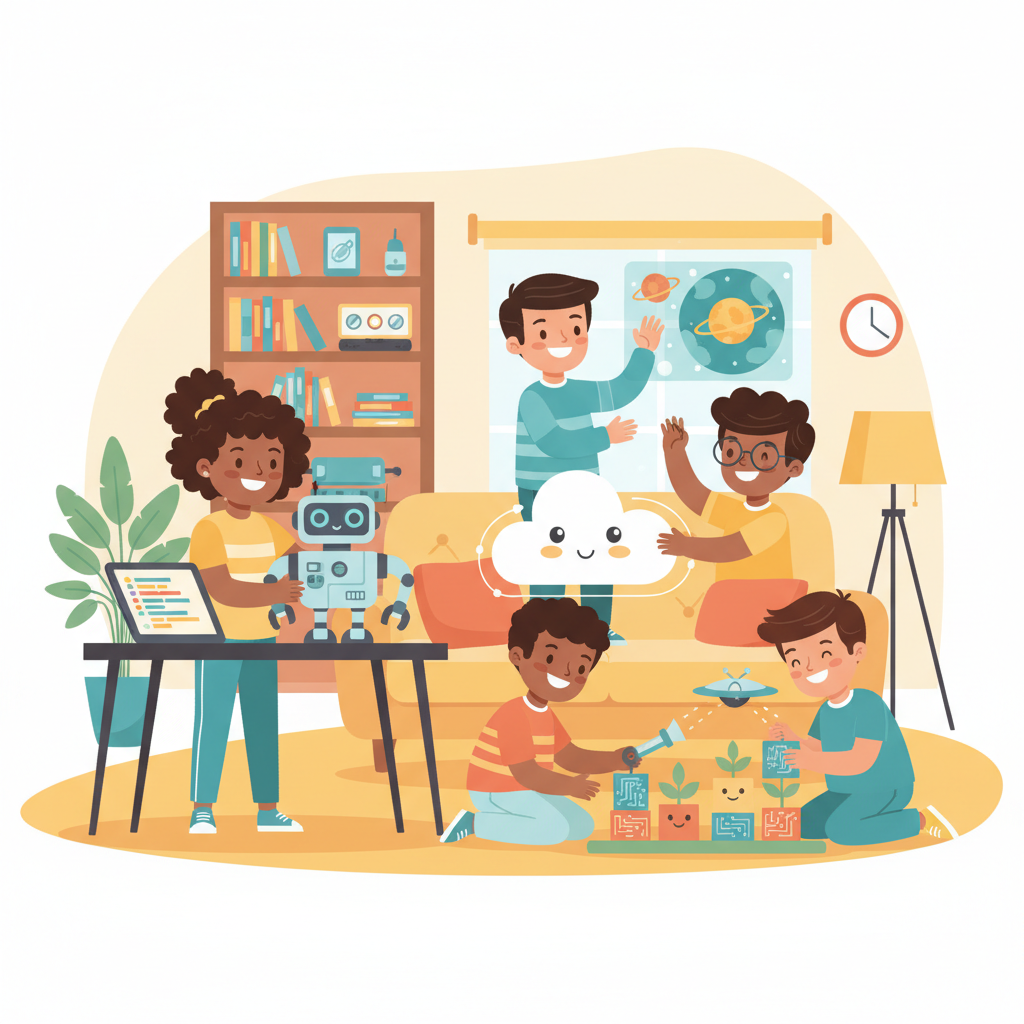
When Kids Stop Consuming Technology and Start Creating It
There's a quiet revolution happening at kitchen tables and bedroom desks around the world. Children as young as seven are building chatbots, training image classifiers, and designing AI-powered games — not in university labs or corporate offices, but at home, with curiosity as their primary tool.
This shift matters enormously. For decades, young people have been passive consumers of technology. Today, with accessible platforms and the right guidance, they're becoming its architects. The stories emerging from families who've embraced AI education are genuinely inspiring — and they offer a roadmap for any parent or educator wondering where to start.
Real Projects, Real Kids: What's Actually Being Built
The Seven-Year-Old Who Taught a Computer to Recognise Her Pets
One of the most heartwarming examples comes from a family in Leeds, whose daughter trained an image classification model to tell the difference between their three cats. Using a beginner-friendly machine learning tool, she collected photos, labelled them, and watched the model improve with each training round. When it finally got all three cats right, she burst into tears of excitement.
What she learned went far beyond technology. She learned about data collection, trial and error, and the patience required when something doesn't work the first time. These are lessons that serve children in every subject and every stage of life.
The Twelve-Year-Old Who Built a Homework Helper
A student in Toronto, frustrated with forgetting his vocabulary lists, built a simple quiz chatbot that tested him on whatever subject he entered. He used a block-based coding environment to string together prompts and responses, gradually adding features like score-tracking and encouraging messages when he got answers wrong.
His parents noticed something remarkable: he spent more time studying, not less — because the process of building the tool had made him genuinely interested in how it worked. His project eventually became a presentation for his school's science fair, where it won first prize.
The Teen Team That Created an AI Storytelling App
Two fifteen-year-olds in Melbourne, friends who bonded over a shared love of fantasy fiction, collaborated on a text-based storytelling app that uses AI to generate plot twists based on a reader's choices. They worked on it over six weekends, dividing responsibilities — one handled the logic and prompts, the other focused on the writing and user experience.
The project taught them collaboration, project management, and how to give and receive critical feedback. It also sparked a broader conversation in their household about how large language models work, what their limitations are, and why thinking critically about AI-generated content matters.
Why Home-Based AI Projects Are So Powerful
School curricula are slowly catching up with the AI revolution, but the pace of change means many classrooms are still years behind. Home-based learning fills that gap — and it does so in a uniquely personal way.
When children build projects at home, they choose topics they care about. A pet. A favourite subject. A creative passion. That emotional connection transforms learning from an obligation into an obsession. They iterate more, persist longer, and celebrate harder when something finally works.
Home projects also allow for a different relationship with failure. In a classroom, getting something wrong can feel public and high-stakes. At home, debugging a broken model or rewriting a clunky prompt is just part of the process — low pressure, high reward.
Platforms like GenAI Kids have been designed specifically with this home-learning dynamic in mind, offering structured project pathways that guide children step by step without removing the joy of discovery.
How Parents and Educators Can Support Young AI Builders
You don't need a computer science degree to support a child who wants to build AI projects. What you need is the right posture: curious, encouraging, and willing to learn alongside them.
Create a "Build Time" Habit
Consistency matters more than intensity. Even thirty minutes a week of dedicated project time, protected from other distractions, can produce remarkable results over a school term. Treat it with the same seriousness you'd give music practice or sports training.
Ask Better Questions
Instead of asking "Did you finish it?" try asking "What did you try today?" or "What would you do differently next time?" These questions reinforce the process-oriented mindset that makes great engineers and thinkers.
Celebrate Milestones, Not Just Outcomes
A model that's 60% accurate is still a working model. A chatbot that handles three conversation paths is still a functioning chatbot. Help children see and celebrate progress, even when the project isn't "done."
Connect Projects to Real Interests
The most successful young AI builders aren't motivated by AI itself — they're motivated by what AI can help them do. Sports statistics, creative writing, animal sounds, favourite TV shows: any genuine interest can become the seed of a meaningful project.
Use Structured Resources to Build Confidence
Especially at the start, structured guidance prevents children from getting stuck and giving up. GenAI Kids offers age-appropriate courses and project briefs that help children build their first models with enough scaffolding to succeed and enough freedom to make something truly their own.
Key Takeaways
- Children as young as six or seven can begin building simple AI projects with the right tools and encouragement
- The most powerful projects are rooted in personal interests — pets, hobbies, subjects the child already loves
- Home-based AI learning builds resilience, critical thinking, and collaboration alongside technical skills
- Parents and educators don't need technical expertise — curiosity and encouragement are the most important ingredients
- Consistent, protected "build time" produces better results than occasional intensive sessions
- Celebrating process and progress (not just finished products) keeps young learners motivated
- Structured platforms like GenAI Kids can provide the scaffolding children need to get started confidently
The Future Is Being Built by Children — Right Now
The children building AI projects today aren't preparing for a future that might involve artificial intelligence. They're living in a present that already does — and they're learning to shape it rather than simply accept it.
For parents and educators, the opportunity is clear: support this curiosity, provide the tools and time, and watch what happens. You may be sitting at the kitchen table with someone who goes on to build something that changes the world.
Start small. Start now. Start with whatever your child already loves.
Ready to help your child build their first AI project? Explore the project library at GenAI Kids and find the perfect starting point for every age and interest level.
Ready to Start Learning AI?
Join thousands of kids on GenAI Kids — free beginner lessons, no card needed.


