The AI Skills Your Child Needs Before Entering the Workforce
Equip your child with essential AI skills for future success. Learn what they need to thrive in the evolving job market.
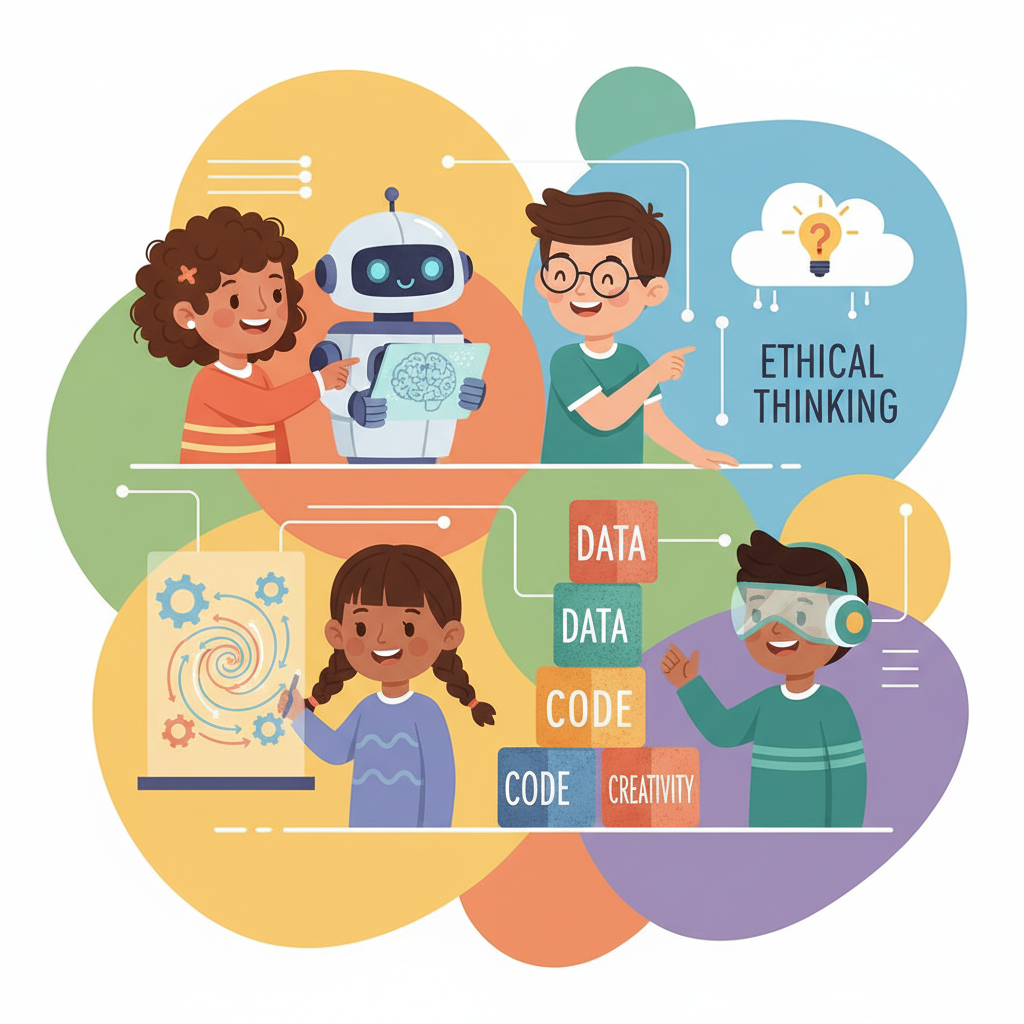
Why AI Literacy Is the New Essential Skill
Think back to when learning to type felt revolutionary, or when knowing how to use a spreadsheet set candidates apart in job interviews. Today, we're at a similar — but far more significant — inflection point. Artificial intelligence is no longer a futuristic concept confined to science fiction; it's embedded in hospitals, classrooms, creative studios, and boardrooms right now.
The World Economic Forum estimates that 65% of children entering primary school today will work in jobs that don't yet exist. What we do know is that nearly all of those jobs will involve working alongside AI in some form. The question for parents and educators isn't whether children need AI skills — it's how early we should start building them.
The good news? AI literacy isn't about turning every child into a programmer. It's about helping them understand, question, and confidently collaborate with intelligent systems. And that journey can begin long before they ever set foot in a workplace.
Understanding AI: More Than Just Using the Tools
There's a meaningful difference between a child who uses AI tools and one who understands how they work. The former follows instructions; the latter adapts, innovates, and leads.
What AI Literacy Actually Means
AI literacy involves three interconnected layers:
- Conceptual understanding — knowing what AI is, how it learns from data, and where its limitations lie
- Practical application — being able to use AI tools purposefully and ethically across different contexts
- Critical thinking — evaluating AI outputs, spotting bias, and asking the right questions when something seems off
A teenager who can only prompt a chatbot is not AI literate. A teenager who can prompt a chatbot, recognise when its output is flawed, understand why it might be biased, and decide how to improve the result — that's a future-ready thinker.
Platforms like GenAI Kids are built around exactly this layered approach, introducing concepts through age-appropriate lessons that grow in complexity as children develop.
The Core AI Skills Employers Will Value
As AI continues to reshape industries, certain capabilities are emerging as genuinely transferable and highly valued across sectors — from healthcare to marketing to engineering.
1. Prompt Engineering and Effective Communication with AI
Knowing how to give clear, structured instructions to an AI system is already a sought-after professional skill. It requires a child to think precisely, consider context, and refine their approach based on results — skills that map directly onto problem-solving and communication in any career.
Encourage children to experiment. Ask them to compare results when they phrase a question differently. This builds intuition that will serve them for decades.
2. Data Awareness and Pattern Recognition
AI systems are trained on data, and understanding that basic principle unlocks a lot. Children who grasp concepts like "garbage in, garbage out," who can spot when a dataset might be incomplete or skewed, and who understand why AI sometimes gets things wrong — these children will work with AI rather than being misled by it.
This doesn't require advanced mathematics. Even young learners can begin developing data awareness through games, sorting activities, and guided discussions about where information comes from.
3. Ethical Reasoning and Responsible AI Use
This is the skill most often overlooked — and arguably the most important. Future workplaces will need people who can identify when AI is being used irresponsibly, advocate for fair and transparent systems, and make ethical decisions that algorithms cannot make on their own.
Children need to wrestle with real questions: Is it fair if an AI hiring tool was trained mostly on data from one group of people? What happens when an AI makes a mistake that affects someone's life? These conversations, started early, build the moral frameworks that shape responsible adults.
4. Creativity and Human-AI Collaboration
Contrary to popular fear, AI is not replacing creativity — it's changing what creativity looks like. The most valuable future workers will be those who know how to use AI as a creative partner: generating ideas, iterating quickly, and then applying distinctly human judgement to shape the final result.
Encourage creative projects that involve AI tools — writing, music, visual art, coding. The goal is not to outsource imagination but to amplify it.
Practical Ways to Build These Skills at Home and in the Classroom
You don't need to be a technology expert to support your child's AI education. Here are some genuinely actionable starting points:
-
Start the conversation early. Even with young children, talk about how apps and devices "learn." Ask questions like, "Why do you think YouTube suggested that video?"
-
Use structured learning resources. GenAI Kids offers curriculum-aligned lessons designed for ages 6–16, making it easy to introduce concepts progressively and confidently — whether you're a parent at home or a teacher in the classroom.
-
Encourage questioning over acceptance. When your child uses an AI tool, ask them: Do you think that answer is correct? How could you check? What might be missing?
-
Make ethics part of everyday discussion. Use news stories about AI (self-driving cars, facial recognition, medical diagnoses) as springboards for conversations about fairness, privacy, and human responsibility.
-
Celebrate experimentation and failure. AI literacy is built through trying things, getting unexpected results, and reflecting. Create a home environment where curiosity is rewarded — even when things go wrong.
-
Connect skills to careers they care about. A child passionate about sport? Talk about how AI analyses player performance. Interested in art? Explore how AI is changing design and illustration. Make it relevant.
Key Takeaways
- AI literacy is a foundational skill for virtually every future career, not just technology-focused ones
- True AI literacy means understanding, evaluating, and collaborating with AI — not just using it
- The most valuable skills include prompt communication, data awareness, ethical reasoning, and creative collaboration
- These skills can be developed from a young age through structured learning, open conversation, and hands-on experimentation
- Parents and educators don't need to be AI experts — they need to be curious alongside their children
- Resources like GenAI Kids provide age-appropriate, structured pathways that make this learning accessible and engaging
Giving Your Child a Head Start
The children who will thrive in the AI-enabled workforce are not necessarily those who can code the most complex algorithm. They are the ones who can think critically, communicate clearly, act ethically, and adapt continuously. These are fundamentally human qualities — and AI literacy is what will allow those qualities to shine in a world where machines handle more of the routine.
The time to start building these skills is not when your child is 18 and entering the job market. It's now — in the conversations at the dinner table, the questions asked after school, and the learning resources you choose today.
Your child's future employers haven't written their job descriptions yet. But they will expect AI fluency as a given. Let's make sure your child is ready.
Ready to Start Learning AI?
Join thousands of kids on GenAI Kids — free beginner lessons, no card needed.


