The Best AI Tools for Kids to Use Safely at Home: A Beginner-Friendly Roadmap
Introduce your child to the future with these safe, beginner-friendly AI tools. Our guide helps parents navigate the best technology for learning and creativity at home.
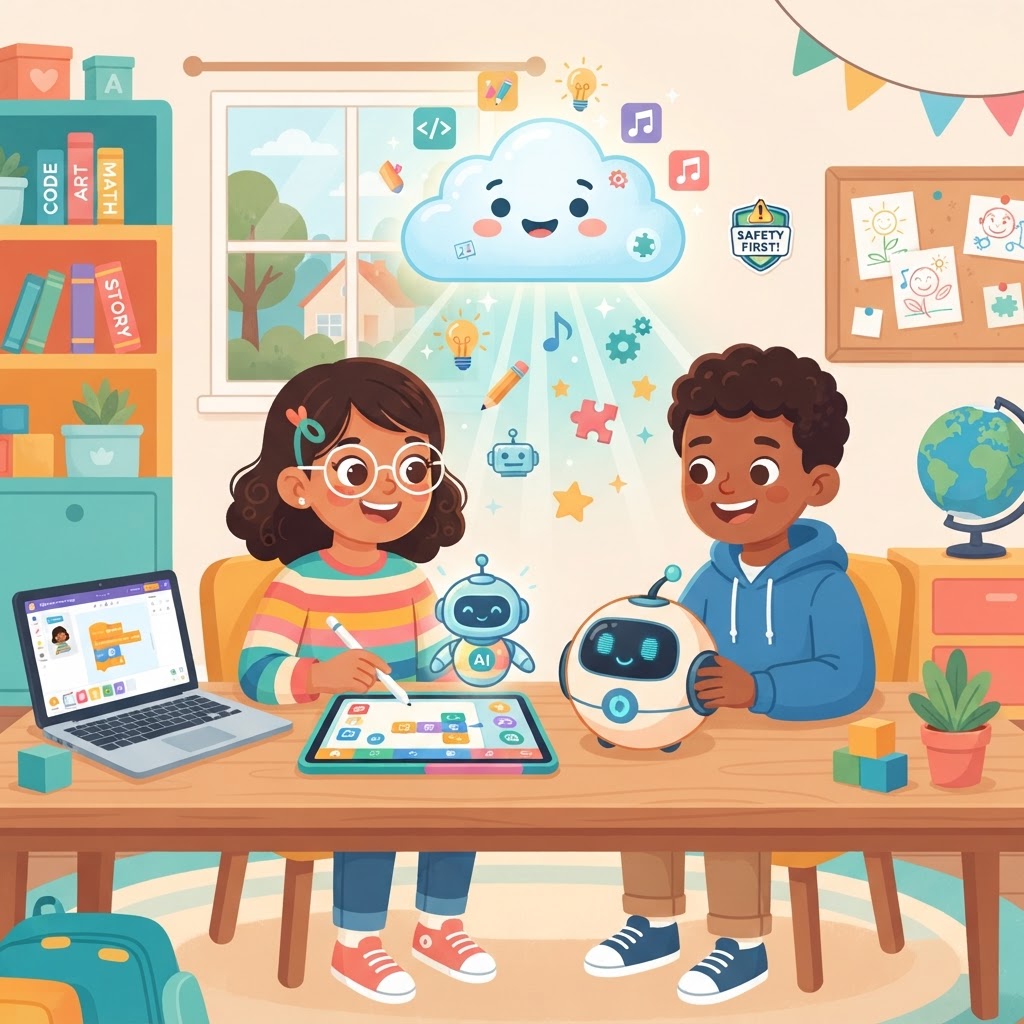
Why AI Literacy Starts at Home
Artificial intelligence is no longer something children only encounter in science fiction films or computer science classrooms. It's in the apps they use to do homework, the voice assistants they chat with before bedtime, and the recommendation engines shaping what they watch and read. For parents and educators, this raises an important question: how do we help children engage with AI thoughtfully, safely, and confidently?
The good news is that you don't need a computer science degree to guide your child through this landscape. With the right tools and a little context, home learning can become one of the most powerful environments for building genuine AI literacy. This roadmap will help you choose age-appropriate AI tools, set meaningful boundaries, and turn everyday technology into a learning opportunity.
Understanding What "Safe" Really Means for Kids and AI
Before diving into specific tools, it's worth unpacking what safety actually means in this context — because it goes beyond just content filters.
Data Privacy Comes First
Many AI tools collect user data to improve their systems. When children are involved, this becomes a significant concern. Always check whether a tool is compliant with child data protection laws such as COPPA (Children's Online Privacy Protection Act) in the US or GDPR provisions for minors in the UK and Europe. Look for platforms that:
- Don't require children to create accounts with personal information
- Have transparent privacy policies written in plain language
- Allow parents to review or delete collected data
Age-Appropriate Design Matters
A tool that's technically "educational" isn't automatically suitable for a six-year-old. Look for platforms designed with developmental stages in mind — ones that limit open-ended, unmoderated conversations and use structured activities instead. The difference between a child typing freely into a general-purpose chatbot versus completing a guided AI challenge on a purpose-built learning platform is enormous.
The Best AI Tools for Kids by Age Group
Here's a curated breakdown to help you find the right fit for your child's age and interests.
Ages 6–9: Playful Exploration
At this stage, children learn best through play, colour, and creativity. Look for tools that introduce AI concepts without requiring children to interact directly with language models.
- Google's Teachable Machine (teachablemachine.withgoogle.com) — A brilliantly simple tool where children can train a basic machine learning model using images, sounds, or poses from their webcam. It's hands-on, visual, and genuinely fun.
- Scratch with AI extensions — MIT's Scratch platform now includes extensions that let children build projects using machine learning blocks. It introduces the logic behind AI without any text-heavy interaction.
- GenAI Kids — Designed specifically for young learners, GenAI Kids offers structured, curriculum-aligned activities that introduce AI vocabulary, concepts, and ethical thinking in a safe, supervised environment.
Ages 10–13: Building Understanding
At this age, children are ready to go deeper. They can begin to understand how AI systems work, why they sometimes make mistakes, and what it means for a machine to "learn."
- AI4K12 Initiative resources — A free, educator-backed programme with five core ideas about AI, complete with classroom-ready activities suitable for home use.
- Cognimates — A creative AI platform where children can programme smart games, train models, and even explore natural language processing through age-appropriate projects.
- ChatGPT (with supervision) — With a parent present, older children in this bracket can begin exploring how large language models respond to different prompts. Frame it as an experiment: Why did it say that? Is it always right? How would you improve it?
Ages 14–16: Critical Engagement
Teenagers are ready for nuance. This is the age to move from using AI to questioning it.
- Elements of AI (elementsofai.com) — A free online course originally designed for university students but highly accessible to motivated teenagers. It covers how AI works, its societal impact, and career pathways.
- Runway ML — For creatively minded teens, this tool explores AI-generated art and video, sparking conversations about creativity, authorship, and bias in training data.
- GenAI Kids' advanced modules — As children grow, GenAI Kids scales with them, offering more sophisticated content about AI ethics, bias, and real-world applications that connect to GCSE and A-level thinking.
Practical Tips for Parents and Educators
Choosing the right tool is only half the job. How you use it matters just as much.
Sit Beside Them — At Least at First
Co-engagement is one of the most effective strategies in digital learning research. The first few times your child uses any AI tool, sit with them. Ask questions. Show genuine curiosity. This models thoughtful engagement and opens the door to conversations you might not have otherwise had.
Create a Family AI Agreement
Just as many families have screen time rules, consider creating a simple "AI agreement" together. It might include things like: We always check if AI-generated information is accurate. We never share personal details with AI tools. We talk about anything that feels strange or confusing.
Connect AI to Real Life
Point out AI in daily life — the spam filter in your email, the autocomplete on your phone keyboard, the "you might also like" suggestions on streaming services. Children who see AI as something woven into everyday life are better prepared to think critically about it.
Don't Aim for Perfection
You don't need to understand every technical detail to be a good guide. What children need most is an adult who asks questions alongside them and treats mistakes as learning moments.
Key Takeaways
- Safety means more than content filters — check for data privacy compliance and age-appropriate design before choosing any tool
- Match tools to developmental stages — playful exploration for younger children, critical engagement for teenagers
- Co-engagement matters — sitting with your child during early AI interactions builds trust and opens conversation
- A family AI agreement creates shared expectations and makes AI a topic you discuss openly
- Platforms like GenAI Kids provide structured, safe, curriculum-aligned learning that takes the guesswork out of where to start
Your Next Step Starts Today
AI literacy isn't a subject to be taught once and forgotten. It's an ongoing conversation — one that evolves as the technology evolves and as your child grows. The families and classrooms that start these conversations early, with the right tools and the right spirit of curiosity, are giving children something genuinely valuable: the confidence to navigate a world that AI is already shaping.
You don't need to have all the answers. You just need to start asking the questions together.
Ready to begin? Explore the free resources at GenAI Kids and take the first step toward raising a thoughtful, confident, AI-literate child — at whatever age they're at right now.
Ready to Start Learning AI?
Join thousands of kids on GenAI Kids — free beginner lessons, no card needed.


