The Best AI Tools for Kids to Use Safely at Home: A Practical Guide for Parents
Help your children explore technology confidently with our guide to the safest, most educational AI tools designed specifically for kids.
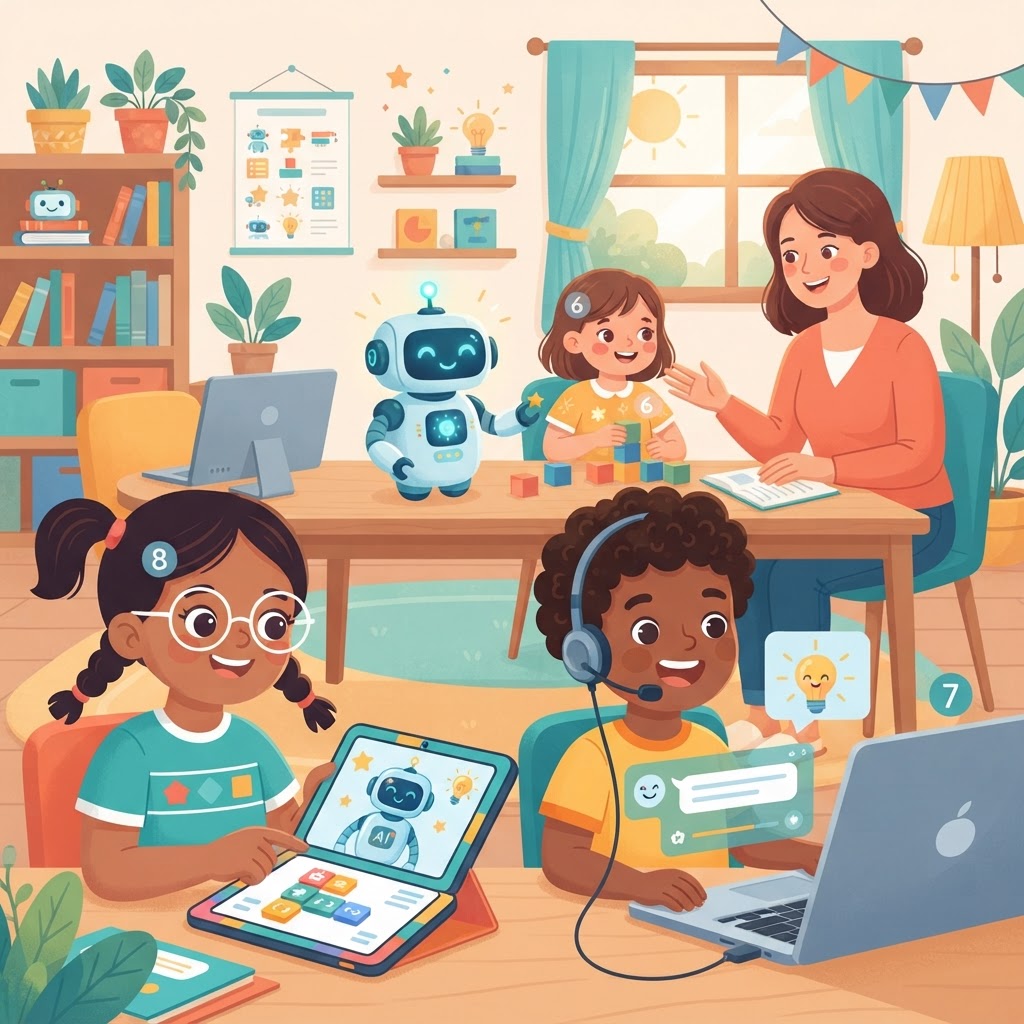
Why AI Literacy Starts at Home
Artificial intelligence is no longer something children only encounter in science fiction. It's in the voice assistants they speak to, the recommendation engines that suggest their next favourite video, and increasingly, the homework helpers they turn to after school. As a parent or educator, you don't need to be a tech expert to help children engage with AI safely and meaningfully — but you do need a starting point.
This guide is designed to give you exactly that: a clear, practical overview of the best AI tools children can use at home, alongside sensible advice for keeping those experiences safe, positive, and genuinely educational.
What Makes an AI Tool "Safe" for Kids?
Before diving into specific tools, it's worth understanding what safety actually means in this context. A child-appropriate AI tool should tick several important boxes:
Privacy and Data Protection
Look for tools that comply with children's data privacy regulations such as COPPA (in the US) or the UK's Children's Code. This means the platform shouldn't collect sensitive personal data or target children with advertising based on their behaviour.
Age-Appropriate Content Filtering
Safe AI tools for children include robust content moderation that prevents exposure to harmful, violent, or adult material — even when children ask unexpected or off-script questions.
Transparency and Parental Oversight
The best platforms offer parent dashboards, usage reports, or clear terms explaining how the tool works. Children should also be encouraged to understand that they're talking to an AI, not a person.
Purposeful Design
There's a meaningful difference between a tool designed for children and one that's simply accessible to them. Purpose-built educational platforms tend to provide far better guardrails and age-calibrated experiences.
Recommended AI Tools for Home Learning
Here's a curated look at tools that balance engagement, education, and safety — categorised by what they do best.
For Creative Writing and Storytelling
Canva's Magic Write (with parental guidance) — Canva's AI writing assistant can help children brainstorm story ideas, generate character descriptions, or overcome creative blocks. While not exclusively designed for children, it's relatively safe when used alongside a parent and integrates well with Canva's broader creative suite.
Squibler or similar AI story tools — Several platforms now offer child-friendly AI story generators that let kids collaborate with AI to build narratives. These are particularly effective for reluctant writers who find a blank page intimidating.
Parental tip: Sit alongside your child during these sessions, especially at first. Ask questions like, "What do you think the AI got right?" and "What would you change?" This builds critical thinking alongside creativity.
For Homework Help and Learning Support
Khan Academy's Khanmigo — One of the most thoughtfully designed AI tutors available, Khanmigo is built specifically for learners. Rather than simply giving answers, it asks guiding questions that help children work through problems themselves. This aligns brilliantly with evidence-based learning principles and is suitable for children from around age 10 upwards.
Socratic by Google — Aimed at secondary school students, Socratic allows children to photograph a question and receive step-by-step explanations. It covers maths, science, history, and more. Google's infrastructure provides reasonable content safeguards, though parental awareness of usage is still advisable.
For Understanding AI Itself
This is where platforms like GenAI Kids come into their own. Rather than simply using AI, GenAI Kids teaches children aged 6–16 how AI works — from machine learning basics to understanding why algorithms make the decisions they do. Developing this foundational literacy helps children become informed, confident users of any AI tool they encounter, now and in the future.
Setting Up a Safe AI Environment at Home
Having the right tools is only half the equation. How you introduce and monitor AI use matters just as much.
Have the "This Is AI" Conversation First
Before your child uses any AI tool, explain — in age-appropriate terms — what they're interacting with. Younger children (6–9) benefit from analogies: "It's like a very clever machine that learned from millions of books, but it doesn't actually know things the way you and I do." Older children can explore more nuance around how large language models are trained.
Set Time and Context Boundaries
AI tools for homework help are valuable, but they can become a crutch if children default to them before attempting work independently. A simple household rule — "Try it yourself for ten minutes first" — preserves the cognitive effort that builds real understanding.
Review Outputs Together Regularly
AI makes mistakes. Factual errors, biased outputs, and awkward phrasing are all common. Make it a habit to occasionally review what the AI produced with your child and discuss whether it's accurate, fair, or helpful. This is one of the most powerful ways to build media literacy in practice.
Keep Accounts Managed by Adults
For any platform that requires an account, ensure it's created and managed by a parent or guardian. Use family email addresses rather than creating accounts in your child's name where possible, and revisit privacy settings periodically.
Key Takeaways
- Not all AI tools are created equal — look for platforms designed specifically for children, with robust privacy protections and content filtering.
- Parental presence, especially early on, significantly improves both safety and learning outcomes.
- The best AI tools guide rather than replace — they should prompt thinking, not short-circuit it.
- AI literacy is itself a vital skill — platforms like GenAI Kids help children understand the technology, not just consume it.
- Mistakes are teachable moments — AI errors offer genuine opportunities to practise critical thinking.
- Simple household rules around independent effort before AI assistance protect children's cognitive development.
Your Next Step as a Parent or Educator
The good news is that you don't need to choose between keeping children safe and letting them benefit from AI. With thoughtful tool selection, honest conversations, and a little ongoing involvement, you can create a home environment where AI genuinely supports learning without replacing the curiosity, effort, and critical thinking that make learning meaningful.
If you're looking for a structured, age-appropriate starting point, explore what GenAI Kids offers — from beginner-friendly explainers for six-year-olds to deeper conceptual content for teenagers. Building understanding early is the best foundation for a future where AI is everywhere.
Because children who understand AI don't just use it — they shape it.
Ready to Start Learning AI?
Join thousands of kids on GenAI Kids — free beginner lessons, no card needed.


