The Best Free Resources to Learn AI Online for Kids
Help your child explore the future with our curated list of the best free online tools designed to teach kids the fundamentals of artificial intelligence.
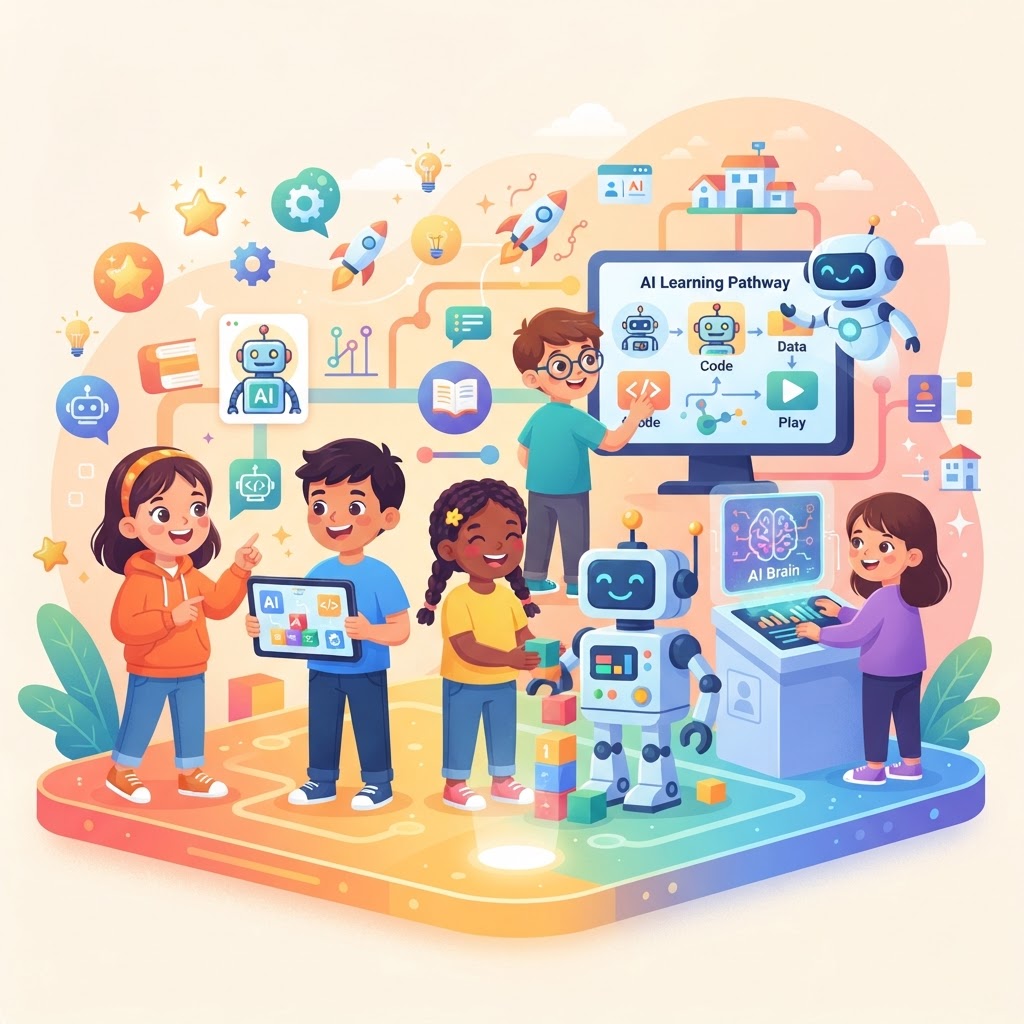
Why Free AI Education for Kids Matters More Than Ever
Artificial intelligence is no longer a distant concept from science fiction films — it's embedded in the apps our children use every day, from voice assistants to recommendation algorithms on streaming platforms. Yet most school curricula haven't caught up with this reality. That leaves parents and educators asking an important question: where do we begin?
The good news is that you don't need an expensive subscription or a computer science degree to get started. A growing collection of free, high-quality resources makes AI education genuinely accessible for children aged 6 to 16. Whether your child is a curious beginner or a budding tech enthusiast, there's something out there — and in this guide, we'll walk you through the best of it.
Foundational Platforms That Make AI Fun and Approachable
Machine Learning for Kids
Developed by Dale Lane at IBM, Machine Learning for Kids is one of the most classroom-ready free tools available. It gives children hands-on experience training their own machine learning models using text, images, numbers, and sounds — then lets them build projects in Scratch or Python. The platform requires no account for exploration, making it brilliantly low-barrier for first-time users.
Best for: Ages 10–16 | Cost: Free
Google's Teachable Machine
Teachable Machine by Google is a browser-based tool that lets children train a model to recognise images, sounds, or poses — all within minutes, no coding required. It's a powerful way to demystify the idea that "teaching" a computer is something ordinary people can do. Children consistently respond with delight when a webcam learns to distinguish between their thumbs up and thumbs down gestures.
Best for: Ages 8–16 | Cost: Free
MIT App Inventor with AI Components
MIT App Inventor has long been a favourite in coding education, and its AI extensions — including image classification and chatbot components — bring machine learning concepts into real app-building projects. It's block-based and visual, meaning the barrier to entry remains low even as the concepts grow in sophistication.
Best for: Ages 12–16 | Cost: Free
Structured Curricula and Video-Based Learning
Free platforms are wonderful, but children often benefit from guided, structured learning that builds concepts progressively rather than jumping straight into tools.
GenAI Kids
GenAI Kids is designed specifically for this age group, offering age-appropriate lessons that introduce AI concepts in a structured, engaging way. Rather than diving into tools without context, GenAI Kids builds foundational understanding first — helping children (and their parents) understand what AI is, how it works, and why it matters. Resources are organised by age range, making it straightforward for parents to find relevant starting points without feeling overwhelmed.
AI4K12 Initiative
The AI4K12 Initiative, a collaboration between CSTA and AAAI, provides free curriculum materials aligned to five big ideas in AI. Their "Developing AI Literacy" resources include lesson plans, videos, and interactive activities suitable for different grade levels. This is particularly useful for educators who want something curriculum-ready rather than a collection of individual tools.
YouTube Channels Worth Bookmarking
For visual learners, several YouTube channels offer child-friendly AI explanations:
- CrashCourse AI — A 20-episode series covering everything from neural networks to ethics, presented in an engaging, teen-friendly format
- TED-Ed — Features short, beautifully animated videos on AI topics such as bias, autonomous vehicles, and the future of work
- Code.org — Includes video introductions to AI and machine learning as part of their broader computer science curriculum
Teaching AI Ethics Alongside the Fun Stuff
One of the most important — and often overlooked — aspects of AI education is helping children develop critical thinking about how AI is used and who it affects. This isn't about making technology scary; it's about raising thoughtful digital citizens.
Day of AI
Day of AI, developed by MIT, provides free curriculum modules focused on real-world AI applications and their societal impacts. Activities encourage students to question bias in datasets, consider privacy implications, and debate where AI should and shouldn't be used.
Responsible AI for Youth (RAY)
The University of Maryland's RAY programme offers free project-based learning materials that guide students through identifying problems in their communities and exploring whether AI could — responsibly — help solve them. This approach grounds abstract concepts in genuine relevance.
Practical Tips for Getting Started at Home or in the Classroom
Knowing resources exist is one thing; actually using them consistently is another. Here's how to make AI learning stick:
Start with curiosity, not curriculum. Ask your child, "Have you ever wondered how Netflix knows what you want to watch?" That single question can open a conversation that makes the first lesson feel natural rather than forced.
Use short sessions. Twenty to thirty minutes of focused exploration beats a two-hour marathon that ends in frustration. Most of the tools above are designed with this in mind.
Learn alongside your child. You don't need to be an expert. In fact, modelling curiosity — saying "I don't know, let's find out together" — teaches a growth mindset that matters far beyond AI.
Explore GenAI Kids as a starting point. If you're unsure where to begin, platforms like GenAI Kids provide a structured pathway that removes the guesswork, especially for parents who feel less confident with technology topics.
Celebrate projects, not just progress. When a child trains a model that recognises their pet or builds a simple chatbot, celebrate that creation — sharing it with family reinforces the sense of accomplishment and makes them want to do more.
Key Takeaways
- Free, high-quality AI resources exist for every age group from 6 to 16
- Hands-on tools like Teachable Machine and Machine Learning for Kids make concepts tangible and fun
- Structured curricula (AI4K12, GenAI Kids) are valuable for building progressive understanding
- AI ethics education is just as important as technical skills — don't skip it
- Short, consistent learning sessions outperform sporadic marathon sessions
- Parents don't need technical expertise to guide their children — curiosity is enough
Start the Journey Today
The children in your care are growing up in a world that AI is actively reshaping. The question isn't whether they'll encounter artificial intelligence — it's whether they'll be equipped to understand and shape it, or simply be shaped by it.
The resources in this guide are free, proven, and ready to use. Pick one, spend thirty minutes exploring it with your child this week, and see where curiosity leads. And if you're looking for a structured starting point, visit GenAI Kids to explore age-grouped lessons designed to make that first step as easy as possible.
The best time to start was yesterday. The second best time is right now.
Ready to Start Learning AI?
Join thousands of kids on GenAI Kids — free beginner lessons, no card needed.


